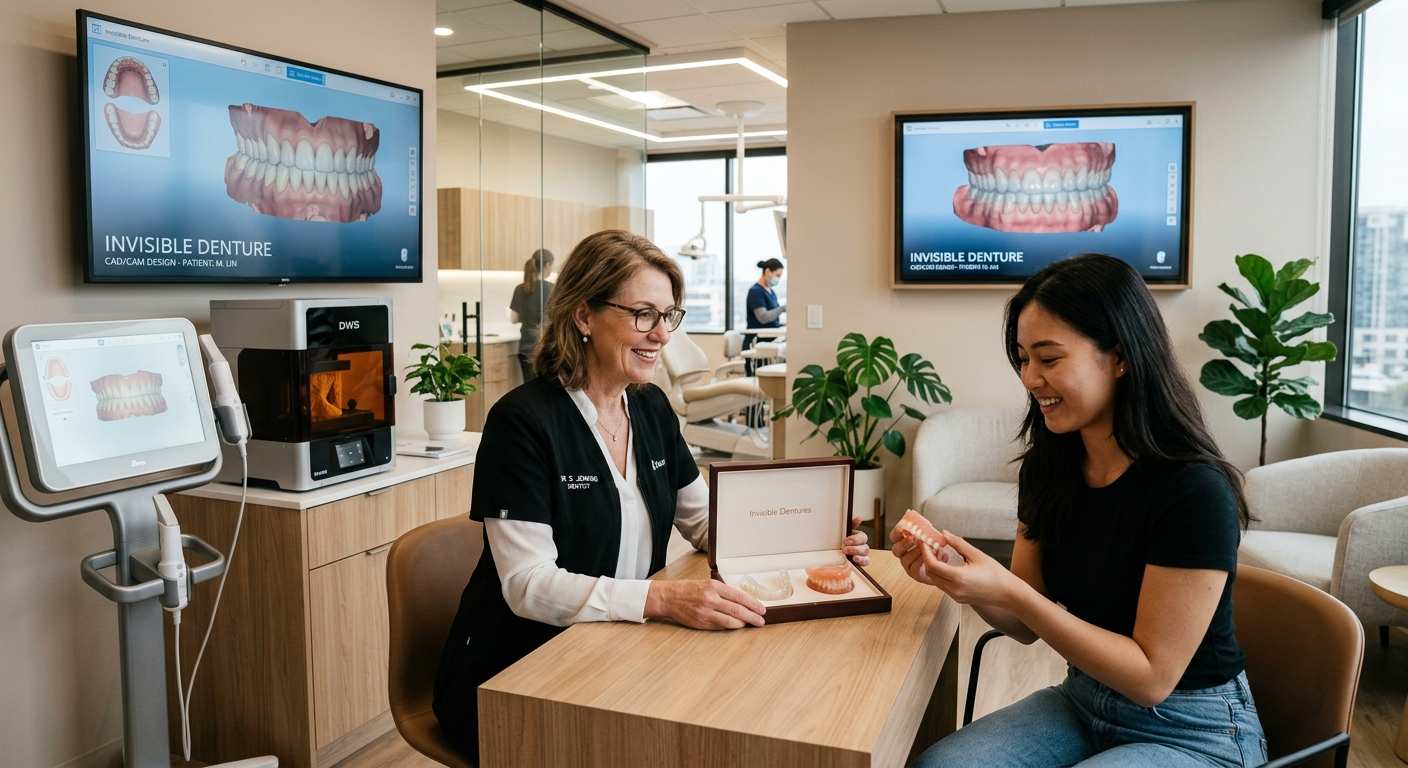
Highlights
- Invisible dentures offer a discreet, comfortable alternative to traditional dentures with advanced technology.
- Their growing popularity reflects a trend toward personalized, patient-centered dental care solutions.
Summary
Invisible dentures represent a significant advancement in tooth replacement options, combining aesthetics, comfort, and functionality. By utilizing innovative materials and digital technologies like 3D printing, they offer customized solutions that mimic the natural appearance and function of teeth. Increased comfort and improved fit address issues related to traditional dentures, such as visibility and bulkiness, while digital workflows enhance production efficiency, leading to better overall patient satisfaction.
Overview
Invisible dentures have garnered attention for their superior aesthetic and functional attributes. The emergence of biocompatible materials and technologies has led to enhanced durability and a more natural look, shifting the paradigm in denture design. This tailored approach enables patients to experience improved comfort and stability, setting invisible dentures apart from traditional options.
Types
Invisible dentures are designed in various forms to meet specific needs. Invisible partial dentures are one such type, focusing on aesthetics with their metal-free construction and flexible materials. Full invisible dentures also prioritize appearance, crafted from lightweight and gentle materials that ensure comfort and mimic natural gums effectively.
Design Features
Advanced design features of invisible dentures focus on a seamless blend of comfort and functionality. The use of digital workflows helps refine the design process, allowing for accurate fitting and personalized adjustments. Materials, such as acrylic resin and flexible thermoplastics, enhance durability and visual appeal while adapting well to individual oral conditions, reinforcing their practical benefits.
Clinical Applications
Determining the right type of invisible denture requires careful clinical assessment to ensure optimal fit and function. For urgent cases, same-day solutions can bridge the gap while more permanent options are considered. The natural appearance and secure fit of invisible dentures enhance communication and self-esteem, while modern fabrication techniques advance overall patient outcomes.
Fabrication and Fitting Process
The fabrication of invisible dentures starts with precise clinical evaluations to capture unique dental impressions, essential for achieving a successful fit. Digital technologies streamline the production process, allowing for quicker turnaround times, while secondary impressions help ensure functional alignment with the patient’s muscle dynamics. The fitting phase involves fine-tuning the prosthesis for optimal comfort and satisfaction.
Implant Placement for Support
Dental implants form a stable foundation for supporting dentures, with surgical guides enhancing precision during placement. Techniques like “all-on-4” allow multiple implants to support a full row of teeth, providing a secure solution. Patient comfort is prioritized during the adjustment of these implant-supported dentures to ensure both stability and functionality.
Benefits
Invisible dentures provide numerous advantages over traditional options, particularly in aesthetics and comfort. Their design allows for a natural appearance that boosts self-confidence. Additionally, reduced maintenance needs and technological innovations contribute to their appeal, making them suitable for busy lifestyles while supporting good oral hygiene.
Limitations and Challenges
Despite their advantages, invisible dentures come with higher costs and maintenance requirements. Aesthetic considerations may sometimes be compromised depending on the type used, particularly with designs involving metal components. Patients must also be prepared for the need for adjustments over time due to changes in oral structure, which could increase long-term treatment plans.
Care and Maintenance
Invisible dentures are typically easier to maintain than traditional options. Daily brushing and overnight soaking in cleaners are essential to keep them hygienic. Regular dental visits are crucial for ensuring good fit and monitoring oral health, enabling timely adjustments as needed.
Comparisons with Traditional Dentures
The shift toward invisible dentures is underscored by their superior aesthetics and comfort compared to traditional counterparts. They are designed to avoid the bulky and artificial appearance of conventional options, providing a personalized fit that enhances user experience. The precision involved in their design ultimately reduces discomfort, contributing to a more favorable perception among users.
Advances and Innovations
Ongoing advancements in 2026 highlight the evolution of invisible dentures, particularly through 3D printing and improved materials. These innovations allow for faster, tailored fittings and enhance the prosthetics’ overall durability and aesthetic quality. The trend reflects a commitment to integrating digital technology into dental care, resulting in functional and visually appealing solutions for patients.
Patient Perspectives
Patients opting for invisible dentures frequently report enhanced self-esteem and satisfaction with their appearance. The comfort, minimal maintenance, and innovative fitting processes contribute to their popularity, especially among those with active lifestyles. It’s important for patients to remain realistic about adapting to and caring for their dentures to achieve optimal results and longevity.
The content is provided by Blake Sterling, ficustolife