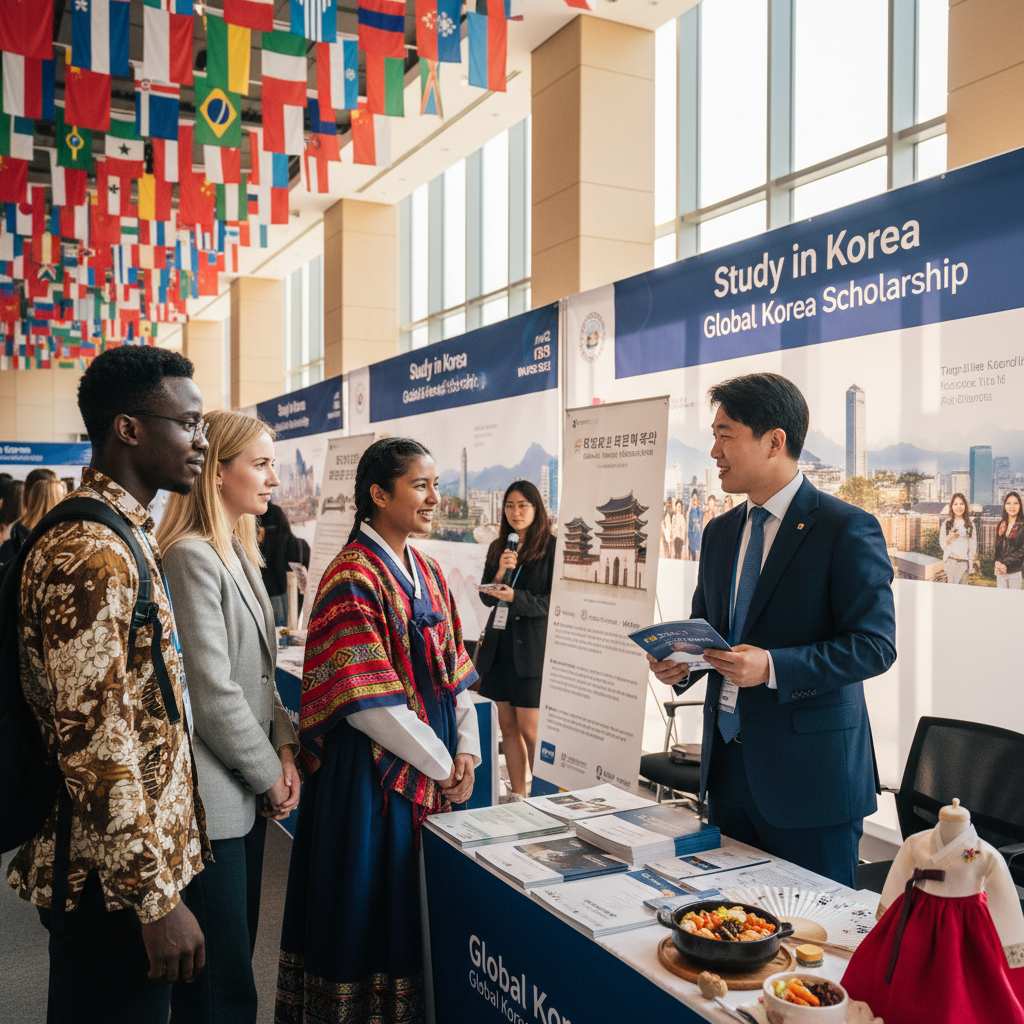
Highlights
- The Global Korea Scholarship offers comprehensive funding for international students aspiring to study in Korea.
- South Korea's scholarship programs enhance global academic exchange and provide transformative opportunities for successful applicants.
Summary
The Global Korea Scholarship (GKS) for 2026 represents South Korea’s initiative to attract exceptional international students, providing a fully funded opportunity for undergraduate, graduate, and research degree candidates. Managed by the National Institute for International Education (NIIED), the GKS covers tuition, living costs, airfare, health insurance, and research support. With approximately 2,000 spots available, candidates can apply through either the Embassy Track or the University Track, each requiring adherence to stringent eligibility criteria, including academic excellence and language proficiency, alongside a new mandatory online application system.
Overview of Scholarship Opportunities in South Korea for 2026
For those interested in studying in South Korea, the 2026 scholarship landscape includes the Global Korea Scholarship (GKS), which is among the most comprehensive. This government-funded program not only covers tuition and living allowances but also fosters international academic exchange. Various universities, foundations, and corporations supplement these offerings with additional scholarships, widening the options available to prospective students and enhancing Korea’s academic diversity.
Global Korea Scholarship (GKS) Details
The GKS is a sought-after scholarship for international students wishing to pursue Master’s or Doctoral degrees in South Korea. It plans to award about 2,000 scholarships in 2026, divided between the Embassy Track and the University Track, each with unique requirements and submission processes.
Application Tracks and Procedures
Applicants must choose between the Embassy Track, which allows submission through local embassies to up to three universities, and the University Track, which involves direct applications to a single university. Each track mandates exclusive applications; applying to both will lead to disqualification. In 2026, applications will exclusively be submitted online between February 12 and February 25, simplifying the submission process.
Eligibility Criteria
Eligibility for the GKS hinges on several factors: applicants must meet specific age limits—under 25 for undergraduates and under 40 for graduates—while also demonstrating academic merit and language proficiency. Students must not hold or have parents who hold Korean citizenship, ensuring that the program focuses on true international exchange.
Benefits of the GKS
The GKS offers extensive benefits, including coverage of tuition, living expenses, health insurance, and additional monthly allowances, making it a highly competitive choice for students. Scholars are incentivized further with grants based on academic performance and progress, facilitating their educational journey in Korea.
Purpose and Impact
The GKS aims to cultivate international friendships by providing global students opportunities at top Korean institutions. Graduates benefit from enhanced career prospects, reflecting the program’s alignment with South Korea’s vision for international educational exchange.
Eligibility Criteria for 2026 Scholarships
Meeting the rigorous eligibility criteria for the GKS is crucial for applicants. These standards encompass age, nationality, and academic prerequisites that must be carefully reviewed to enhance chances of selection.
Academic Qualifications
Different academic milestones are required: undergraduate applicants must have graduated or expect to graduate from high school by December 31, 2025, with a minimum CGPA of 80% or top-class ranking. Graduate applicants must hold the appropriate degrees by July 31, 2026, ensuring they meet the specific entrance standards of the chosen program.
Nationality and Age Requirements
Applicants must be citizens from countries specified by NIIED, and neither they nor their parents can possess South Korean citizenship. Age restrictions vary by educational level. Furthermore, academic professionals from certain countries may have extended age limits.
Language Proficiency and Health
While no formal language test scores are mandatory, proficiency in Korean can enhance application competitiveness. Additionally, applicants must be physically and mentally capable of completing their studies in Korea, ensuring they can manage the challenges of international education.
Additional Conditions
Prospective scholars must not currently be studying in Korea and should ensure their participation will not conflict with military obligations in their home countries. Adhering closely to the established application guidelines and deadlines is crucial for maximizing selection potential.
Application Process for 2026
The application process has transitioned to a digital format, requiring candidates to complete their applications through the official Study in Korea website. Applicants can select one of the two tracks, with the online system designed to simplify submission while retaining strict adherence to guidelines. All applications must include necessary documents, validating academic and personal qualifications.
Support Systems and Resources for Applicants
Support resources for GKS applicants are designed to facilitate a smooth application experience. The official Study in Korea website is crucial for accessing guidelines, completing applications, and ensuring compliance with submission requirements. Both tracks offer unique support systems, and regular updates from GKS are essential in navigating deadlines and maintaining organized documentation.
Challenges Faced by International Applicants
International applicants face logistical and procedural challenges throughout the scholarship application process. The need for precise documentation, adherence to age and nationality restrictions, and technological readiness for the online submission can be daunting. Additionally, applicants must navigate military service obligations and ensure compliance with home country laws regarding dual citizenship.
Impact and Outcomes of Scholarship Programs
Scholarship programs in South Korea have strengthened global academic networks and fostered significant international collaboration. These programs enhance cultural ties while maintaining rigorous academic standards, ultimately leading to enriched educational experiences for international students and greater competitiveness for South Korean institutions.
Additional Scholarship Opportunities and Resources
In addition to the GKS, a plethora of scholarship options exists through various universities and organizations, enhancing access for international students. As applicants explore these opportunities, they should remain attuned to specific criteria and support resources, which can greatly improve their chances of success in studying in South Korea.
Tips and Recommendations for Applicants
Prospective applicants should approach the GKS application with careful planning and thorough preparation. This includes meticulous adherence to guidelines, timely submission of required documents, and crafting compelling personal statements that showcase their passion and qualifications for scholarship. Understanding eligibility requirements and leveraging available resources will significantly aid in maximizing scholarship chances.
The content is provided by Harper Eastwood, ficustolife