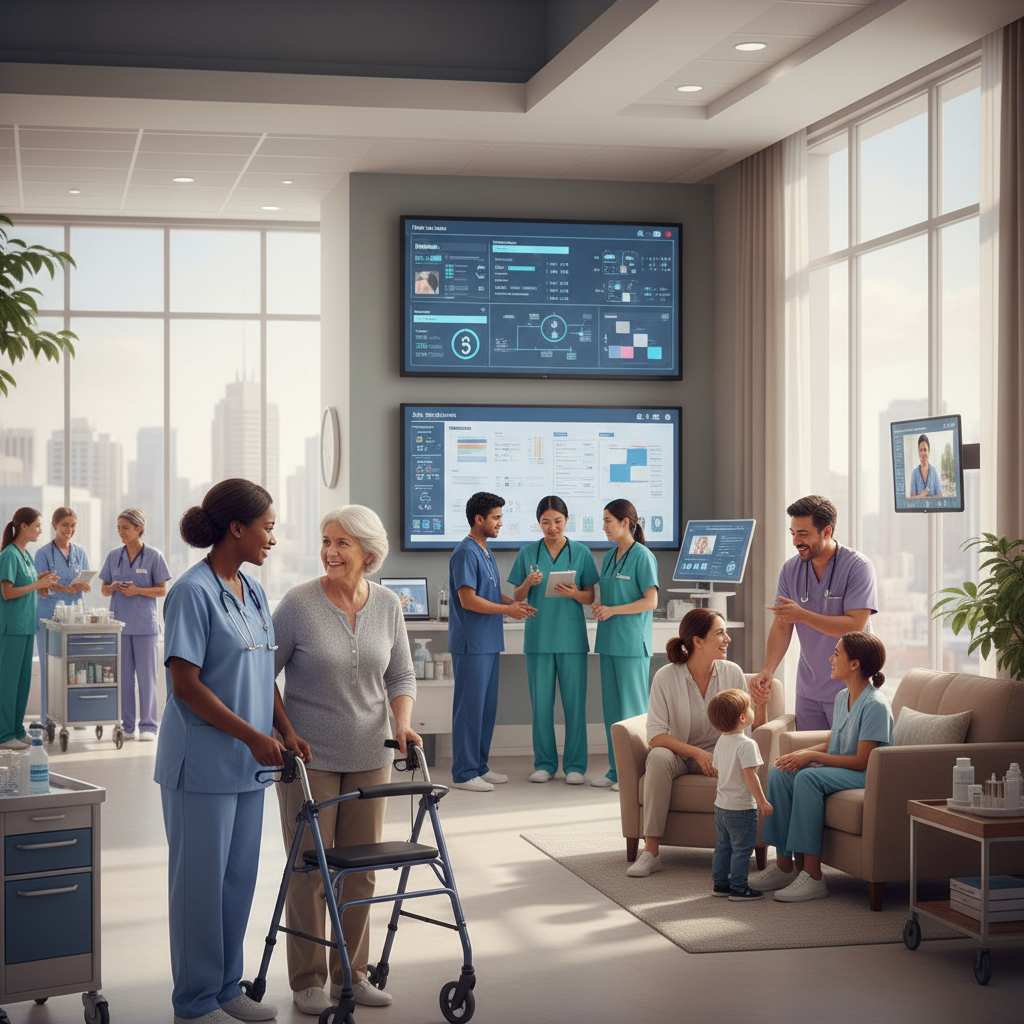
Highlights
- Healthcare support careers are rapidly growing, offering accessible and stable opportunities by 2026.
- Embrace evolving training programs to enhance your skills in this thriving healthcare landscape.
Unlocking Healthcare Support Career Opportunities by 2026
Healthcare support careers are rapidly growing, offering roles in patient care, diagnostics, and administration that are vital for effective healthcare delivery. These roles, including nursing assistants and home health aides, are not only diverse and accessible but also resilient to automation, which enhances their appeal as stable career choices. The surge in demand for these positions is driven by an aging population, workforce shortages, and the complexities of modern care models.
Job growth in healthcare support is projected to rise sharply, particularly for roles like home health aides, due to increasing healthcare utilization and provider scarcity. Innovative roles, such as virtual nursing, are emerging from technological advancements, creating new opportunities within the sector. Therefore, understanding the demand and growth potential in this field can help prospective workers navigate their career options effectively.
Understanding Healthcare Support Careers
Healthcare support careers include diverse roles that assist in delivering patient care and managing healthcare operations. These positions range from practical, hands-on roles to critical back-end functions that ensure operations run smoothly. The appeal of these careers lies in their accessibility, often requiring minimal formal education while offering robust employment opportunities.
Employers are consistently seeking skilled individuals in healthcare support, making these careers attractive for those transitioning from other fields. The blend of practical skills with invaluable patient interaction ensures that these roles directly impact patient outcomes while fulfilling a vital need in the healthcare system.
2026 Job Market Projections
The job market for healthcare support roles is positioned for significant growth, driven by structural changes and persistent demand. Projections indicate that healthcare occupations will maintain much faster growth than the average for all careers through 2034, highlighting the necessity for skilled professionals in this arena. For instance, the demand for home health aides alone is expected to grow substantially to accommodate the needs of an aging population.
Key factors influencing this growth include an aging workforce and fewer new entrants into healthcare professions, which can exacerbate shortages in critical areas. Organizations are increasingly relying on innovative roles, such as virtual nurses, to meet operational needs while addressing potential physical burdens on healthcare workers.
Drivers of Growth and New Opportunities
The ongoing growth in healthcare and social assistance sectors is attributed to various factors, such as increased access to healthcare services and the aging of the Baby Boomer generation. As this demographic ages, the demand for home care and related support roles continues to swell, propelling workforce growth. Additionally, shifting awareness around women’s health and changes in workforce demographics are spawning new service needs, creating fresh opportunities in healthcare.
Technological innovations, particularly AI and digital health tools, play a pivotal role in transforming healthcare delivery, optimizing efficiency, and heightening patient care. Emerging career paths linked to these technologies will require new skill sets, further diversifying opportunities within healthcare support roles.
Impact of Technology on Healthcare Support Roles
Emerging technologies are transforming how healthcare support roles operate, with tools like electronic health records (EHRs) and telehealth becoming mainstream. These advancements allow professionals to enhance their efficiency while adapting to the demands of modern healthcare delivery. The integration of AI technologies offers significant improvements, supporting tasks ranging from patient intake to remote monitoring, thereby elevating the role of healthcare support workers.
While these innovations offer extensive advantages in terms of operational efficiency, they also raise ethical and security concerns that need to be addressed. Organizations must balance the strategic adoption of technology with the importance of maintaining human oversight to ensure patient safety and data integrity.
Educational Pathways for Healthcare Careers
Pursuing a career in healthcare support requires navigating various educational and training options tailored to individual goals. Quick certification programs, such as those for Certified Nursing Assistants (CNAs), provide an accessible entry point for many individuals. These avenues enable rapid workforce entry while also incorporating essential skills like patient care techniques and medication administration.
For those wishing to pursue formal education, degree programs offer comprehensive training that spans beyond certifications. These programs emphasize applied learning alongside foundational health science knowledge, thereby aligning education with professional industry needs. Specialized fields provide additional prospects for advancement, further enhancing readiness for successful careers in healthcare.
Strategies for Career Advancement
To thrive in healthcare support roles, professionals must adopt strategies geared towards continuous education, skill development, and adeptness with technology. Certifications and ongoing professional development play vital roles in keeping skills relevant and improving patient outcomes in a changing landscape. Flexibility in job assignments allows healthcare support workers to broaden their exposure while honing transferable skills valuable to employers.
Furthermore, incorporating technology into everyday practice is essential. Mastery of digital tools and AI applications not only aids in effective healthcare delivery but is increasingly a requirement in job descriptions across the sector. Continuous learner engagement through structured training programs ensures that individuals are equipped to meet evolving healthcare demands.
Workforce Challenges and Considerations
In the 2026 landscape, the healthcare support workforce faces numerous challenges, including escalating operational costs and changing workforce dynamics. Employers are under increased pressure owing to healthcare cost management and service delivery demands. Many organizations are looking at innovative staffing models that may resemble gig work to maintain flexibility and efficiency in caregiving.
Regulatory Environment and Healthcare Policies
The regulatory landscape for healthcare in 2026 emphasizes addressing workforce challenges, improving care quality, and integrating technology. Policymakers are focused on creating staffing models that enhance care delivery while addressing physician shortages and workforce burnout through supportive organizational policies. Advances in mental health support and AI integration in healthcare operations reflect ongoing commitments to improving workforce resilience and efficiency.
Innovations and Future Prospects
The healthcare sector is expected to innovate significantly by 2026, particularly with the continued integration of AI, wearables, and genomics into everyday practice. These technologies are not only enhancing care quality but are also expected to create new niches within healthcare support roles. Educational programs are evolving alongside these innovations, equipping the workforce with the practical skills necessary to adapt to future challenges and opportunities while remaining connected to evolving workplace demands.
The content is provided by Avery Redwood, ficustolife