Highlights
- Accredited online RN to BSN programs enhance career opportunities and improve patient outcomes.
- Flexible learning formats empower working nurses to advance their education without compromising their jobs.
Summary
Unlocking Opportunities: Best Accredited Online RN to BSN Programs presents various pathways for registered nurses (RNs) to earn a Bachelor of Science in Nursing (BSN) degree through accredited online programs. These programs enhance clinical experience and equip nurses with leadership skills and knowledge of healthcare policy, addressing the demand for BSN-prepared professionals. Online formats provide essential flexibility, accommodating the professional commitments of working nurses while delivering quality education focused on enhancing patient outcomes and meeting institutional standards like Magnet status.
Key criteria such as curriculum rigor, support services, and affordability define the best RN to BSN programs, along with the integration of technology and clinical experiences designed to address students’ schedules. Students may face challenges adapting to academic demands and varying levels of technology use, yet dedicated support systems and comprehensive resources can assist in overcoming these hurdles. This overview emphasizes the importance of accredited programs in shaping a competent nursing workforce.
Overview of RN to BSN Programs
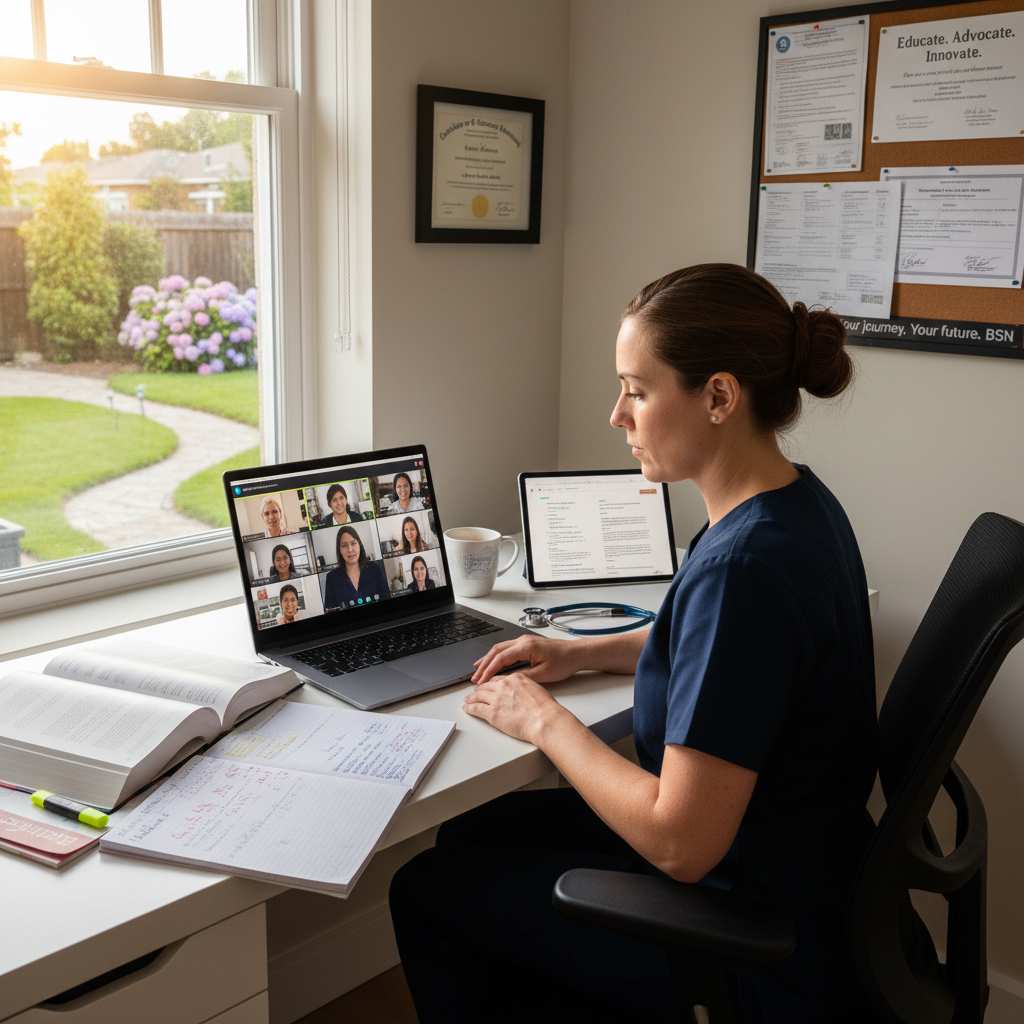
RN to BSN programs cater to RNs seeking to upgrade their qualifications while leveraging their clinical experience. These programs enhance skills in leadership, healthcare systems, and policy understanding, crucial in a healthcare industry that increasingly emphasizes BSNs for improved care outcomes. Online delivery is typical, allowing nurses to fit their studies around their responsibilities, with options for accelerated pacing and local practical experiences for clinical training.
Program curriculums blend core nursing courses with advanced topics including nursing leadership and community health. Flexible scheduling, asynchronous and synchronous class options, and a range of program lengths (18 to 24 months typically) provide additional versatility. Accreditation from bodies like the Commission on Collegiate Nursing Education (CCNE) ensures quality and recognition, a key consideration for choosing the right program.
Accreditation in Nursing Education
Accreditation ensures program quality, with the Commission on Collegiate Nursing Education (CCNE) being a major accrediting agency for nursing programs. CCNE accredited programs guarantee rigorous standards and accountability, vital for the credibility of RN to BSN degrees and facilitating licensure across states. Programs must also maintain equivalent academic quality whether offered online or on-campus and include necessary in-person clinical training to meet accreditation guidelines.
In addition to CCNE, the Accreditation Commission for Education in Nursing (ACEN) provides oversight to broader nursing program categories, adhering to established educational standards. Programs often set specific admission requirements, such as valid RN licensure and background checks, to ensure participant readiness for clinical settings. Completing accredited programs generally opens doors to higher education pursuits, ensuring students are equipped with relevant skills for advanced roles in healthcare.
Criteria for Best Accredited Online RN to BSN Programs
To identify the best RN to BSN programs, key criteria should be evaluated to ensure quality education aligns with personal and professional goals. Accreditation, particularly from CCNE, signifies a program’s adherence to high standards and facilitates nationwide recognition. Programs should provide flexible learning options, accommodating various schedules through asynchronous and synchronous classes, crucial for balancing education with work commitments.
The curriculum must build on existing nursing knowledge with a focus on advanced competencies, while robust clinical experiences enhance practical learning. Support services such as academic advising and tutoring play an essential role in student success, as do cost considerations, including scholarships and financial aid specific to working nurses. Streamlined admissions processes that obviate standardized tests can further enhance access to these programs, promoting educational advancement.
Technology and Digital Tools in Online RN to BSN Programs
As online RN to BSN programs evolve, the incorporation of digital tools is increasingly important. These programs now often feature simulation modules and virtual patient scenarios, equipping nursing students with the necessary digital literacy for modern healthcare. The flexibility provided by online courses allows individuals to engage with the curriculum and manage their learning effectively, although reliable technology access is essential.
Courses typically cover health information systems, fostering students’ abilities to ethically manage patient data, a vital skill in today’s data-driven healthcare environment. While some may face a learning curve with technology, the benefits of enhanced skills in digital literacy and innovative problem-solving greatly support nursing practice and professional development.
Admission Requirements
Admission standards for RN to BSN programs differ by institution but usually require valid RN licensure and completion of certain prerequisite coursework. Some institutions, like Florida Atlantic University, demand specific upper-division credits and background checks, while others may have additional residency and English proficiency criteria. Understanding the admissions process is crucial, as program format can influence requirements and associated fees.
Ensuring early submission of unofficial transcripts can facilitate the assessment of prerequisite fulfillment and transfer credits, enhancing the overall admissions experience. Clinical hours completed in community settings are typical, requiring students to engage directly with practical nursing experiences during their studies.
Benefits of Enrolling in Accredited Online RN to BSN Programs
One primary advantage of pursuing an accredited RN to BSN program is the flexibility it offers, allowing nurses to adjust their learning to fit around their busy schedules. This flexibility is essential for nurses who balance work and family responsibilities while seeking career advancement through further education. Enrolling in an accredited program also ensures a quality education that enhances employability and upward mobility within healthcare roles.
Graduates from these programs develop competencies that align with modern healthcare demands, including effective communication and leadership skills. Completion of the program not only facilitates eligibility for a range of nursing roles but can also lead to increased earning potential, mirroring the industry’s growing preference for BSN-prepared candidates.
Challenges Faced by Students and Mitigation Strategies
Online RN to BSN students often face challenges, particularly adapting to the academic rigor that demands strong research and writing skills. The transition involves shifting from a focus on clinical tasks to engaging in research and professional writing, which may create anxiety or overwhelm. Moreover, the reliance on technology can challenge those less familiar with digital tools, sometimes leading to feelings of isolation.
To support students, programs typically offer academic advising and tutoring services to aid with coursework and skill development while promoting use of digital tools to enhance learning. Addressing technological adaptation through training and encouraging peer interactions can help students overcome initial hurdles, ultimately fostering success in their academic endeavors.
Future Trends in RN to BSN Education
RN to BSN education is progressing rapidly, with a significant trend towards integrating technology into curricula. Emphasizing telehealth and digital resources caters to the growing digital landscape of healthcare and prepares graduates for effective practice in varied environments. Moreover, education is increasingly focusing on health information systems to ensure nursing students are well-equipped to manage data and utilize technology to enhance patient care.
The content is provided by Harper Eastwood, ficustolife