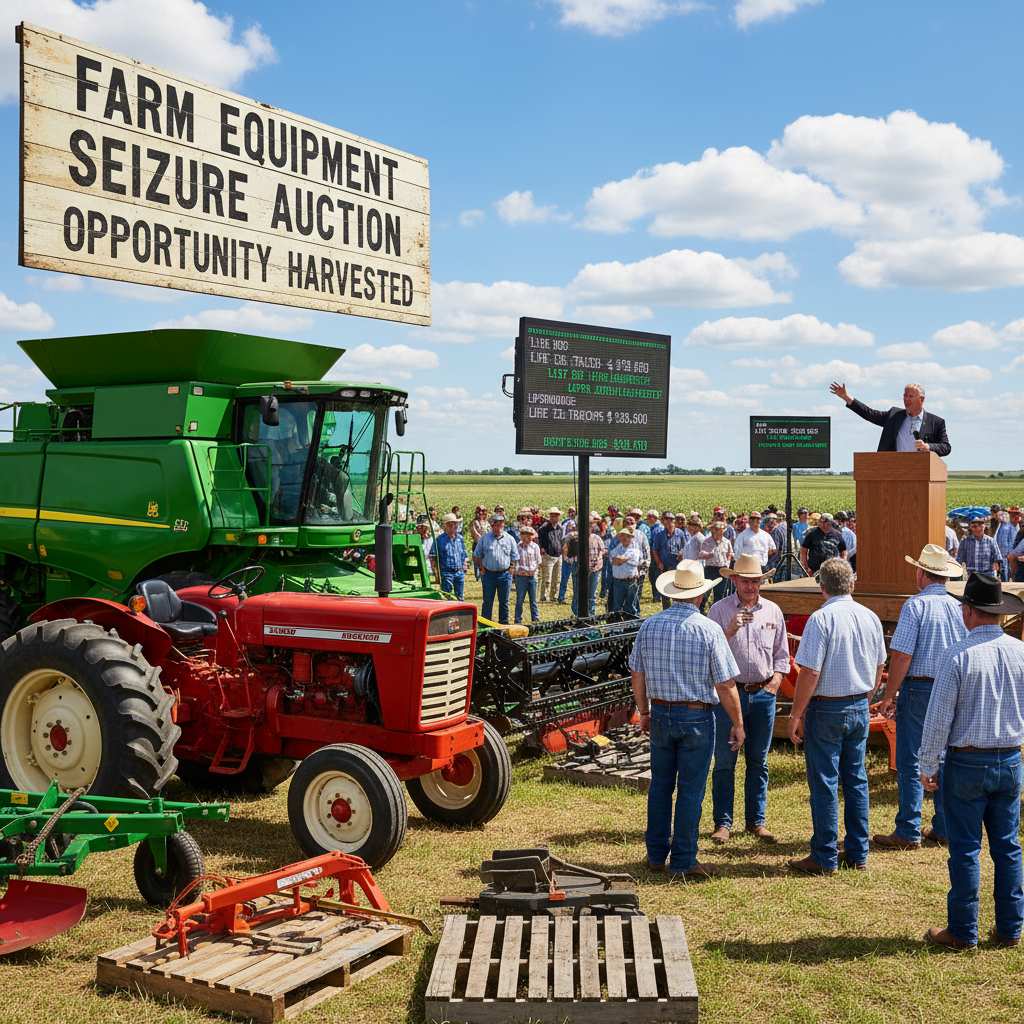
Highlights
- Auctions of seized agricultural equipment offer affordable machinery to empower rural economies.
- Engaging in these auctions supports local businesses and enhances agricultural productivity sustainably.
Summary
Unlocking Opportunities Auctions of Seized Agricultural Equipment highlights organized sales of farming machinery confiscated due to criminal activity or loan defaults. These auctions serve as a cost-effective marketplace for agricultural equipment, enabling farmers and businesses to acquire necessary machines at reduced prices. Operating under a framework of laws that protects property owners’ rights, these auctions facilitate debt recovery and asset redistribution while promoting economic sustainability in rural communities.
While these sales benefit buyers, they also face challenges, including ensuring due process during seizures and maintaining accurate market valuations. Critics raise concerns about conflicts between property rights and forfeiture laws. Globally, these auctions are involved in broader discussions about agricultural investments that can both stimulate rural development and threaten local livelihoods, reflecting the complex dynamics of modern agriculture.
Background
Agricultural equipment seized by authorities comprises items used in criminal activities, including vehicles and specialized tools. Due process protections ensure owners are informed and can contest seizures, governed by comprehensive laws across multiple jurisdictions. Understanding these legal frameworks is vital for property owners navigating potential seizures while maintaining their rights throughout the process.
Proper appraisal and valuation of equipment are crucial before auctions. Qualified appraisers assess condition and market value through inspections and comparative sales analysis, ensuring transparency and fairness during auctions. Owners affected by public use seizures also have legal protections, which enable them to contest validity and negotiate compensation. Familiarity with local laws is advisable for effectively dealing with these situations.
Purpose and Objectives
The main goal of auctions for seized agricultural equipment is to provide a transparent platform for selling repossessed machinery, allowing access to affordable equipment for farmers. These auctions also support financial institutions in recovering debts through asset liquidation, benefiting both buyers and sellers in the agricultural community.
Another objective focuses on maximizing awareness through multi-level marketing strategies. Auction platforms utilize innovative technologies to ensure competitive bidding and fair access to sales. Maintaining the condition and quality of auctioned equipment is essential, as this impacts long-term value and usability for buyers, promoting sustained agricultural productivity.
Additionally, recent regulations aim to enhance independent repair capabilities for machinery, empowering buyers with the tools and support needed for ongoing maintenance. This ensures that auctioned equipment continues to provide value long after the sale, contributing to the viability of agricultural operations.
Auction Process
The auction process typically follows structured steps, beginning with legal seizure under applicable laws followed by notifications to owners. Seized equipment is often sold through both public and online auctions, with the latter expanding access to potential buyers nationwide. While online formats streamline transactions, traditional auctions can allow for equipment inspection prior to bidding, ensuring informed participation.
A variety of agricultural machinery is auctioned, including niche equipment not commonly available from dealers. Buyers should also be aware of additional fees, such as buyers’ premiums, that apply to auction terms. Transparency in the auction process, supported by professional appraisals, reinforces buyer confidence while ensuring compliance with regulations governing sales.
Participants
Auctions feature contributions from federal agencies, including the U.S. Marshals Service, which manages seized assets to ensure legal compliance with auctioning processes. These agencies work alongside auction companies like Auction Consultants and AuctionTime, which facilitate sales using targeted strategies that improve efficiency for buyers and sellers.
Involvement of experienced auctioneers is critical to managing bidding processes effectively, ensuring smooth transactions during live events. The collaboration of various participants helps restore value to government-seized assets while offering competitive opportunities for farmers and agricultural businesses.
Types of Agricultural Equipment Commonly Auctioned
Seized agricultural equipment auctions feature a range of machinery essential for farming operations, including various tractors and farm implements. Items like sprayers, combines, and specialized tractor attachments are commonly sold, often tailored to specific agricultural tasks.
Other equipment regularly auctioned encompasses tillage, harvest machinery, and livestock supplies. The diversity of auctioned items allows both startups and established farms to acquire necessary tools at competitive prices, facilitating upgrades and expansions in their operations.
Valuation and Pricing
Accurate valuation of seized agricultural equipment is key to ensuring fair pricing during auctions. Data sources such as broker reports and auction results help appraisers assess equipment value, balancing market conditions to avoid costly inaccuracies. Professionals employ comprehensive analyses that combine multiple data streams for transparent valuations.
Tools like the Sandhills Equipment Value Index assist in reflecting market dynamics that can inform buyers and sellers alike. Engaging platforms streamline auction management, enhancing efficiency in the buying process and allowing participants to navigate market fluctuations confidently.
Legal Protections and Owner Rights
Property owners facing seizure of agricultural equipment are shielded by legal protections under constitutional rights, ensuring due process is upheld. Owners have the prerogative to contest government claims and seek resolution through administrative or judicial procedures, safeguarding their interests throughout the seizure process.
Once property is seized, compliance with legal regulations is crucial for subsequent holders. Understanding these protections helps maintain a balance between governmental enforcement and property rights, promoting fairness in the auctioning of seized equipment.
Economic and Community Impact
Large-scale agricultural investments, including auctions of seized equipment, impact local economies and employment levels differently. While direct effects may be concentrated in investment areas, the effects on national agricultural employment can be minimal. Understanding these nuances is essential for evaluating the overall viability of such investments.
Auctions help connect buyers to necessary resources in rural communities while facilitating economic activity. The effectiveness of auction platforms relies on tailored strategies that enhance buyer engagement and support local agricultural needs, affecting long-term rural sustainability.
Challenges and Criticisms
Challenges in the auction process include ensuring due process rights during seizures and safeguarding owners’ interests. Critics emphasize the need for fair treatment under laws governing forfeiture, highlighting potential conflicts with property rights protections.
Moreover, auction dynamics may inadvertently disadvantage producers in bargaining scenarios, raising concerns about accurate valuations and equitable market access. Addressing these broader market dynamics is essential for fair participation and ensuring transparency throughout the auction process.
Regional and International Context
Regionally, large-scale agricultural investments have varying socio-economic effects, with direct benefits and losses experienced locally. Auction platforms that leverage both local expertise and broader reach foster sustainable agricultural practices conducive to community needs, aiding in economic development efforts.
Internationally, auctions of seized equipment often engage diverse formats that extend access to surplus assets while promoting transparency in transactions. The transformation brought about by online auction platforms enhances global participation, reducing logistical challenges while maximizing the efficiency and effectiveness of the sales process.
Case Studies and Examples
Case studies of auctions for seized agricultural equipment illustrate their regional impact and potential benefits. Tailored auctions can provide farmers access to specialized machinery that aligns with local agricultural needs, enhancing operational efficiency. Platforms like AuctionTime exemplify innovation that improves auction accessibility and efficiency.
While challenges exist related to bargaining dynamics, the overall impact of auctions can enhance opportunities for farmers, supporting both individual success and contributing to broader agricultural resilience. Understanding these case studies informs future applications and strategies in the auctioning of agricultural equipment.
Future Prospects
The market for seized agricultural equipment is poised for growth amid evolving economic and industry trends. As the secondary market expands, anticipated demand for affordable agricultural technology will shape buyer behavior and pave the way for new auction strategies. Enhanced auction transparency and comprehensive buyer protections contribute to a more attractive marketplace.
Innovations within auction platforms, such as integrated financing and real-time bidding, are streamlining transactions and facilitating broader participation. These advancements enhance visibility and engagement for auction participants, promoting competitive bidding while supporting the agricultural community at large.
The content is provided by Avery Redwood, ficustolife