Highlights
- Six-month nursing courses provide a rapid pathway to essential nursing qualifications and job readiness.
- Accreditation ensures quality education, making these programs a reliable choice for aspiring nurses.
Summary
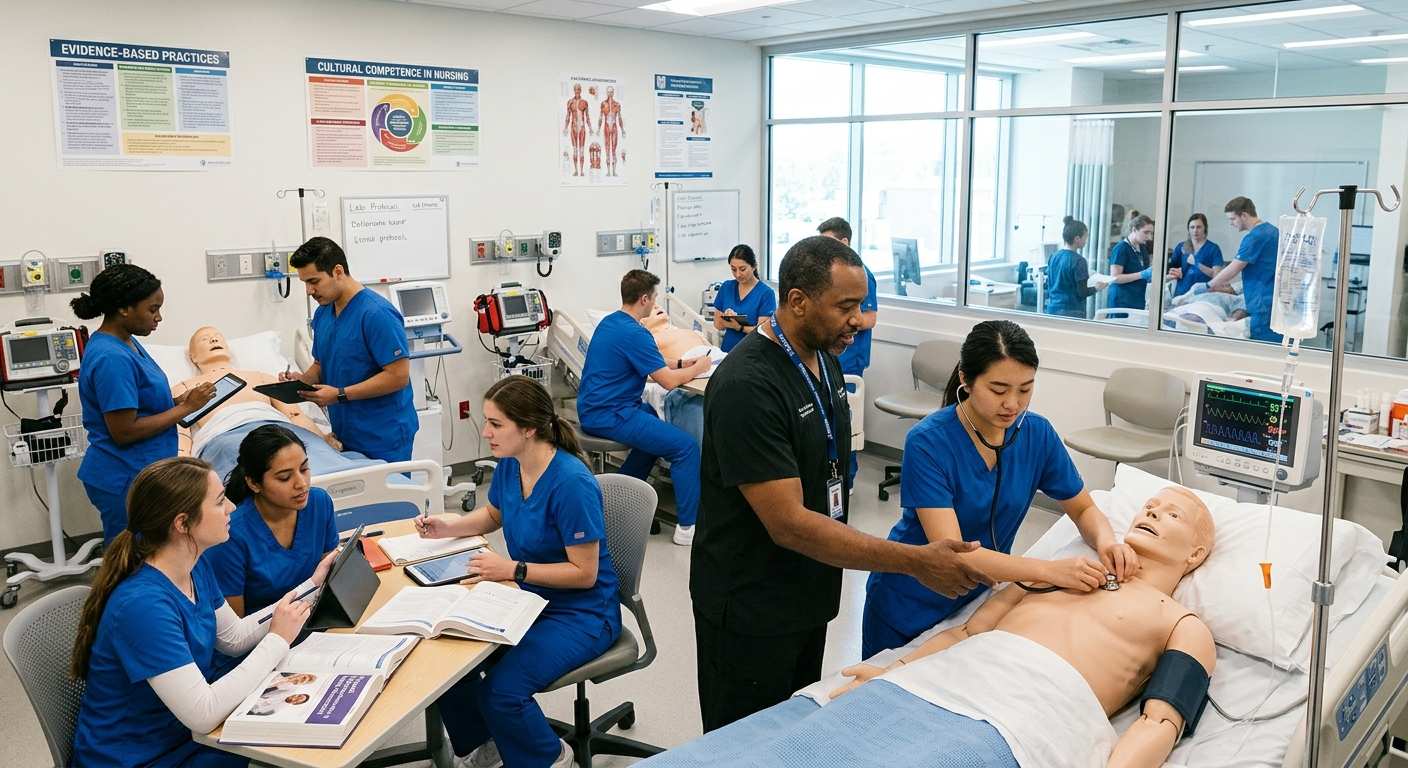
Accelerated six-month nursing courses equip students with essential nursing knowledge and practical skills, enabling rapid entry into the healthcare workforce. These programs emphasize core competencies such as physical assessment, medication administration, and critical thinking, blending theoretical instruction with clinical practice through simulations and real placements. Recognizing the healthcare industry’s increasing need for qualified nurses, these programs emphasize evidence-based content and prepare graduates for licensure exams like the NCLEX-PN.
Graduates often find roles in hospitals and outpatient centers, benefiting from a fast-tracked route to employment and professional growth. However, challenges such as the curriculum’s intensity and the theory-practice gap require effective mentorship and structured support to ensure students succeed. The importance of accreditation by recognized bodies, like the Accreditation Commission for Education in Nursing (ACEN), further underscores the commitment to delivering high-quality education that meets healthcare demands.
Program Structure and Curriculum
Six-month nursing courses focus on a cohesive, evidence-based curriculum that combines theoretical knowledge with practical skills for professional nursing practice. Instruction integrates health assessments, medication administration, and patient-centered care with an emphasis on active learning strategies like “learning by teaching.” This allows students to reinforce understanding while fostering skills crucial for nursing roles.
Early integration of clinical training, including simulations and real-world settings, helps bridge the gap between theory and practice, although students may encounter anxiety or confusion initially. Structured support, mentorship, and consistent supervision are essential to enhance confidence and learning satisfaction during clinical placements. Program outcomes are tracked through metrics such as retention and licensure exam pass rates to ensure graduates are prepared for the demands of the nursing profession.
Admission and Eligibility
The admission process for six-month nursing courses involves meeting both general university and specific nursing program requirements. Applicants often need to complete prerequisite coursework with satisfactory grades and may be required to provide proof of healthcare experience, such as volunteering or work in a healthcare setting. Specific nursing concentrations may necessitate additional coursework in statistics and research methods to ensure preparedness for advanced study.
Institutions typically have transparent admission guidelines and may offer rolling admissions, but it is advisable to confirm specific requirements with program representatives. This clarity ensures prospective students understand their eligibility and can address any concerns about part-time enrollment options if needed.
Accreditation and Recognition
Accreditation is vital for the credibility of nursing education programs, with the Accreditation Commission for Education in Nursing (ACEN) being a key accrediting body. ACEN accreditation represents that a program meets rigorous educational standards. Other agencies, like the Accreditation Board for Specialty Nursing Certification (ABSNC), contribute to maintaining high-quality educational environments and professional standards in various nursing specialties.
Well-accredited institutions often communicate their admission criteria transparently, enhancing the chances of successful enrollment for graduates eager to advance their careers. These programs can lead to various clinical and non-clinical opportunities, from pursuing advanced certifications to specializing in specific healthcare roles.
Clinical Integration in Nursing Practice
Effective integration of theoretical knowledge and practical skills is essential for successful nursing practice. Educational programs emphasize hands-on training in conjunction with academic rigor, allowing students to efficiently transition to the demands of the healthcare field. While clinical training exposes students to real-world scenarios, issues like a disconnect between theory and practice can pose challenges.
High-quality supervision is crucial to improving clinical training experiences, and ongoing professional development for clinical faculty helps ensure better student outcomes. Newly graduated nurses often experience “transition shock,” necessitating support systems to help them adapt their skills and confidence to real-world challenges, particularly in unique settings like rural healthcare.
Challenges Faced by New Graduates
Transitioning from academic training to professional practice presents several challenges for newly graduated nurses (NGNs), including communication and relationship-building within healthcare teams. Many NGNs report feelings of insecurity regarding their clinical skills and face anxiety when navigating unfamiliar hospital environments. These factors can impede their ability to fully engage in their roles and hinder professional integration.
The theory-practice gap complicates the application of learned skills in real-world situations, resulting in discrepancies that can heighten stress. Additionally, workload management can prove daunting, impacting the quality of care delivered. Structured clinical support and mentorship programs are effective strategies for addressing these barriers and bolstering NGNs’ confidence and satisfaction.
Employment Trends and Career Opportunities
Nursing graduates, including those from six-month courses, typically experience favorable job market outcomes, with RNs ranking among the most sought-after healthcare professionals. Specialties like emergency nursing and critical care are particularly in demand, although challenges such as turnover and burnout still persist in the healthcare sector. Career advancement opportunities abound, allowing nurses to move into leadership roles or transition into business-oriented positions within healthcare organizations.
While the prospects remain positive, challenges intensify in rural settings where recruitment and retention issues are more pronounced. Addressing these barriers is critical for ensuring a stable nursing workforce in underserved areas, where comprehensive support and targeted strategies can help promote long-term career satisfaction and success.
Institutions Offering Six-Month Nursing Programs
Various institutions provide accelerated nursing programs designed for registered nurses seeking to obtain their Bachelor of Science in Nursing (BSN) within six months. These programs cater to working professionals through flexible online or hybrid formats, integrating theoretical courses with essential clinical experiences and simulations. For instance, the University of North Texas (UNT) Health Science Center’s RN to BSN program exemplifies this balance.
Because of their intensity, these programs typically have stringent admission criteria that may include holding an active RN license and prior nursing experience. Aspiring students should research the availability and competitiveness of these programs to ensure they meet necessary prerequisites and explore available support services.
Benefits vs. Considerations of Accelerated Nursing Courses
Six-month nursing courses offer significant benefits, such as enabling faster entry into the nursing field and preparing graduates for advanced roles and higher salaries in healthcare. The intensive curriculum focuses on essential nursing concepts, ensuring comprehensive preparation for professional responsibilities. Additionally, the provision of personalized coaching and interview preparation supports students in their job search.
However, prospective students should weigh these benefits against the demanding nature of the accelerated program, which requires strong time management skills and commitment to meet all expectations. Practical training challenges may also arise, highlighting the importance of structured support and mentorship to enhance educational experiences and confidence in clinical settings.
The content is provided by Sierra Knightley, ficustolife