Highlights
- Habitat for Humanity offers essential home repairs for low-income homeowners, enhancing housing stability.
- Engage with Habitat’s programs to support community resilience and promote equitable access to homeownership.
Overview of Habitat for Humanity’s Home Repair Programs
Habitat for Humanity provides comprehensive home repair services to support low-income homeowners, focusing on seniors, veterans, and historically underserved communities. The Home Repair Program prioritizes essential repairs that improve safety, energy efficiency, and accessibility, enabling homeowners to maintain stable living conditions. By collaborating with local affiliates and human services organizations, Habitat facilitates tailored assistance, often requiring participants to engage in volunteer work and home maintenance education.
Programs and Services Offered
Habitat’s home repair initiatives encompass critical repairs, accessibility modifications, and neighborhood revitalization efforts. Services include roofing, weatherization, and limited interior repairs on a case-by-case basis, targeting homeowners with incomes below 80% of the Area Median Income. These programs emphasize adaptations for aging populations and veterans, ensuring independence and comfort through modifications like ramps and door adjustments. Furthermore, many repairs are contingent upon available funding and homeowner participation in educational workshops.
Community Engagement and Volunteer Involvement
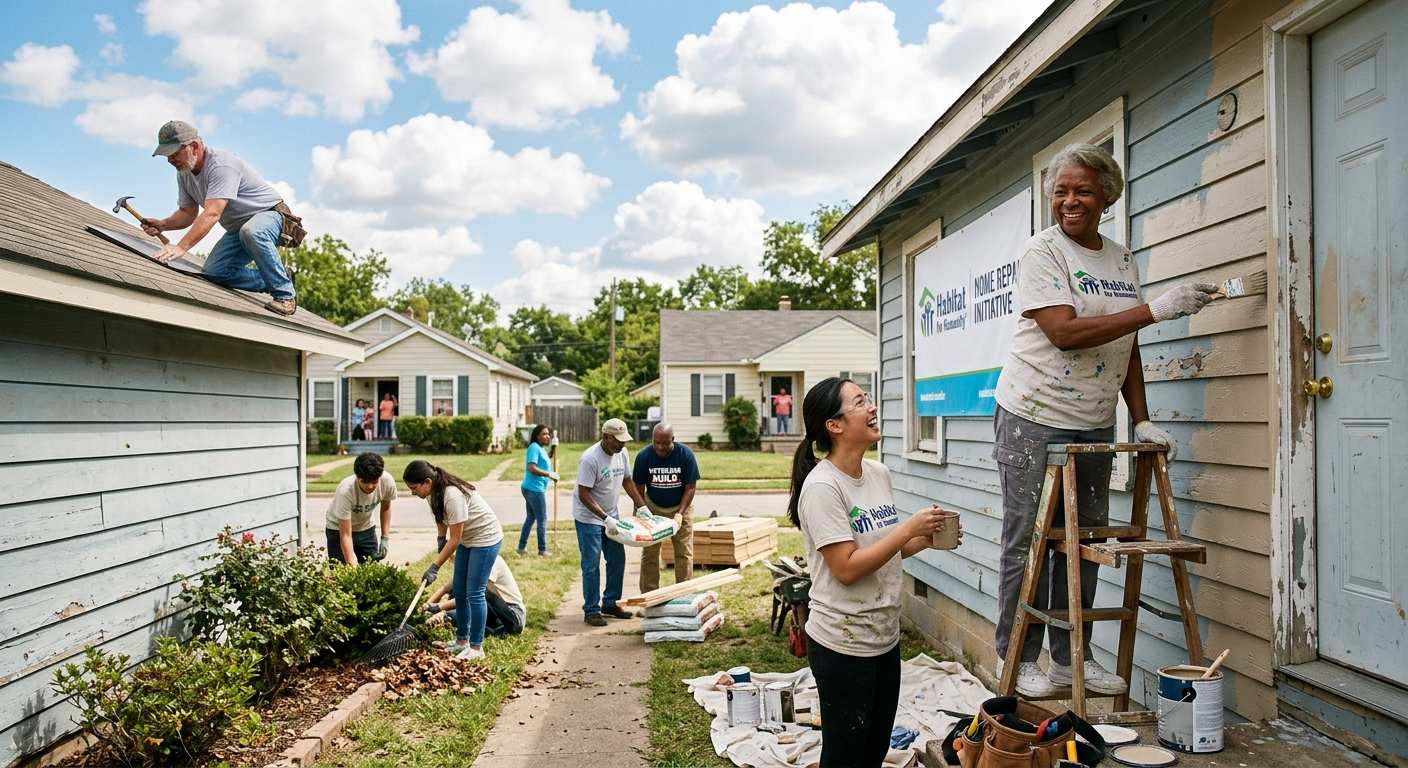
Volunteers are integral to Habitat’s model, providing essential labor for construction and repair projects. Opportunities are varied, accommodating individuals and groups regardless of experience levels, with skilled staff available for training. Despite the challenges of the COVID-19 pandemic, volunteer efforts are crucial to sustaining operations and expanding the reach of home repairs. Through community engagement, Habitat aims to foster relationships that contribute to broader social goals such as enhanced neighborhood resilience and housing equity.
Financial Framework and Challenges
Habitat for Humanity relies on a mix of funding sources, including microloans, corporate sponsorships, and community donations. Despite substantial support, funding restrictions have resulted in a selective process for repair assistance based on need and available resources. The organization’s model distinguishes between larger critical repairs and minor improvements, which may leave some essential needs unmet. Furthermore, the collaboration with local organizations to customize repairs can introduce complexities in service delivery, especially as demand from aging populations increases.
Future Directions and Policy Integration
Looking forward, Habitat for Humanity intends to broaden its program impact by enhancing support for low-income homeowners, particularly those at risk of displacement. By integrating home repair initiatives with broader affordable housing policies, the organization seeks to address systemic inequities and improve housing stability. Continued volunteer involvement and sustainable partnerships will be key to achieving these objectives, as Habitat works to innovate solutions that align with its mission of providing decent, affordable housing for all.
The content is provided by Avery Redwood, ficustolife