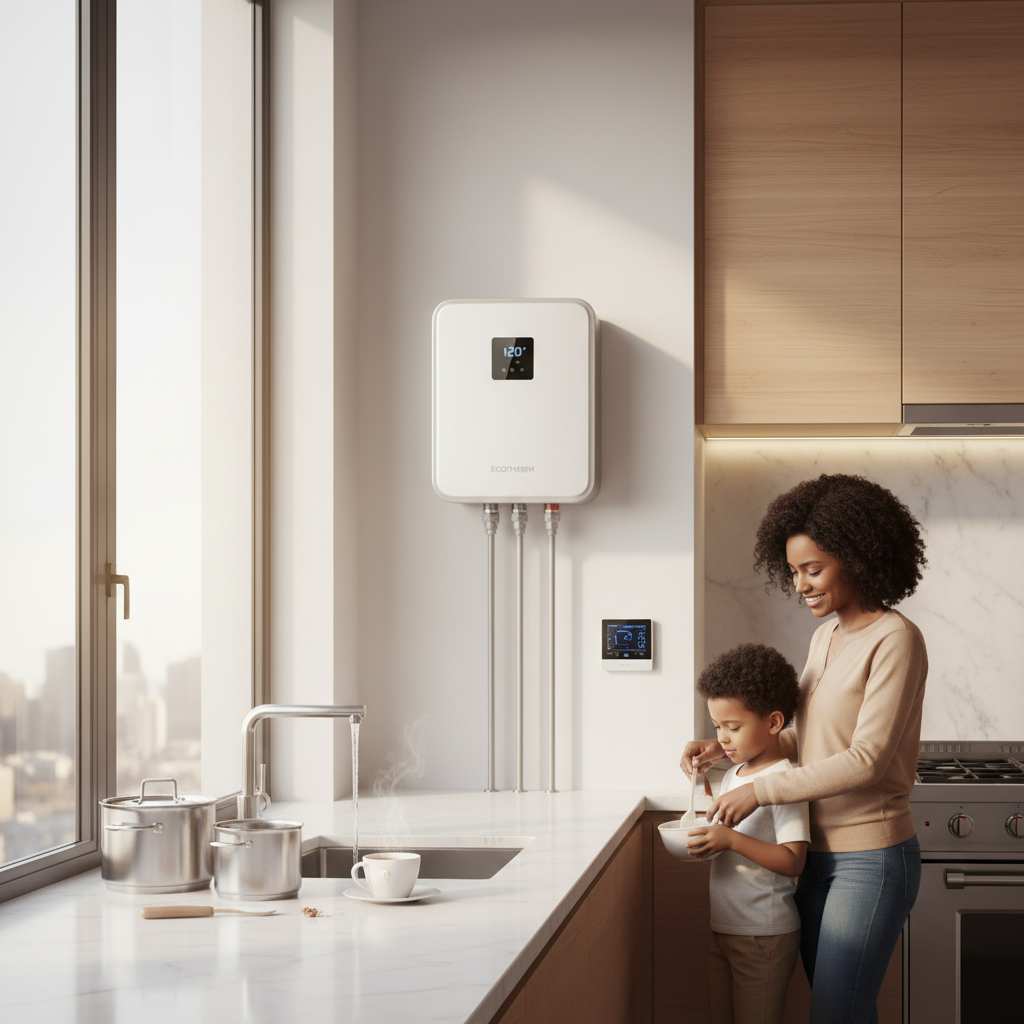
Highlights
- Tankless electric water heaters can reduce water heating costs by up to 50%.
- Enjoy energy efficiency and environmental benefits with easy-to-install tankless systems.
Summary
Tankless electric water heaters, or on-demand water heaters, heat water instantly without the need for a storage tank, offering significant energy efficiency. By operating only when needed, they improve energy consumption, making them ideal for residential use, particularly for those with moderate hot water needs. For households that use 41 gallons or less daily, tankless systems can be 24% to 34% more efficient than traditional tank models, potentially cutting water heating costs by up to 50%. These units also boast thermal efficiencies near 99%, thanks to direct electric heating that avoids pilot lights common in gas models. Their increasing popularity among eco-conscious homeowners is tied to both economic savings and reduced greenhouse emissions, making them attractive for those wanting lower utility bills and minimal environmental impact.
Advantages
One key advantage of tankless electric water heaters is their energy efficiency compared to traditional storage tank units. These on-demand systems can be 8% to 50% more efficient due to the absence of standby heat losses. This translates into substantial savings on electricity bills, enabling some households to reduce water heating costs by as much as 50%. Their compact size and longevity further enhance their appeal, as they take up less space and require less frequent maintenance. Additionally, they contribute to decreasing carbon footprints by reducing annual energy use and greenhouse gas emissions, aligning with consumer preferences for eco-friendly appliances that also improve property value.
Disadvantages and Limitations
Despite their benefits, electric tankless water heaters have limitations that may impact suitability for some customers. They require a robust electrical system, which can involve costly upgrades for homes with inadequate infrastructure. This includes the potential need for dedicated circuits and increased breaker capacity. Installation can also be more complex compared to traditional models, demanding modifications to plumbing and electrical setups. Furthermore, the capacity of these units may fall short during peak demands, which could inconvenience larger households. Water quality issues, particularly with hard water, necessitate regular maintenance to avoid scaling, impacting long-term efficiency and performance.
Cost Analysis
Tankless electric water heaters typically carry higher upfront costs, averaging between $1,100 and $1,200, due to advanced technology and installation requirements. However, their greater energy efficiency often means users can see significant reductions in utility bills, with potential electricity consumption savings reaching up to 50%. Annual operating costs for tankless electric units are estimated at around $535, which is generally lower than traditional electric storage heaters. Additionally, their longer lifespans and lower maintenance requirements contribute to overall cost-effectiveness, offsetting the initial investment over time.
Consumer Profiles and Market Adoption
These water heaters are increasingly popular among residential consumers focused on energy savings and sustainability, accounting for over 72% of the market. Homeowners, particularly in smaller households, find tankless systems an effective way to reduce electricity usage and heating costs significantly. This growth reflects a broader market trend towards energy-efficient appliances, which not only decrease environmental footprints but also enhance home values. Consumer interest is rising as discussions on efficiency and cost-effectiveness gain traction within communities, indicating a robust future demand for tankless electric water heaters.
Maintenance and Troubleshooting
<pMaintenance plays a critical role in ensuring tankless electric water heaters operate efficiently. Regular descaling is necessary to eliminate hard water buildup, which can reduce system efficiency and lead to clogs. While some models may include features that minimize maintenance needs, routine checks should be made to prevent issues. Following manufacturer guidelines is crucial, as improper handling or unauthorized repairs can void warranties. Engaging licensed professionals for maintenance and repairs ensures compliance with safety regulations and efficient performance, extending the unit's lifespan.
The content is provided by Blake Sterling, ficustolife