Highlights
- Habitat for Humanity’s HVAC options enhance comfort and reduce energy costs for families.
- Innovative partnerships enable access to efficient systems, supporting sustainability and community engagement.
HVAC Systems and Habitat for Humanity’s Mission
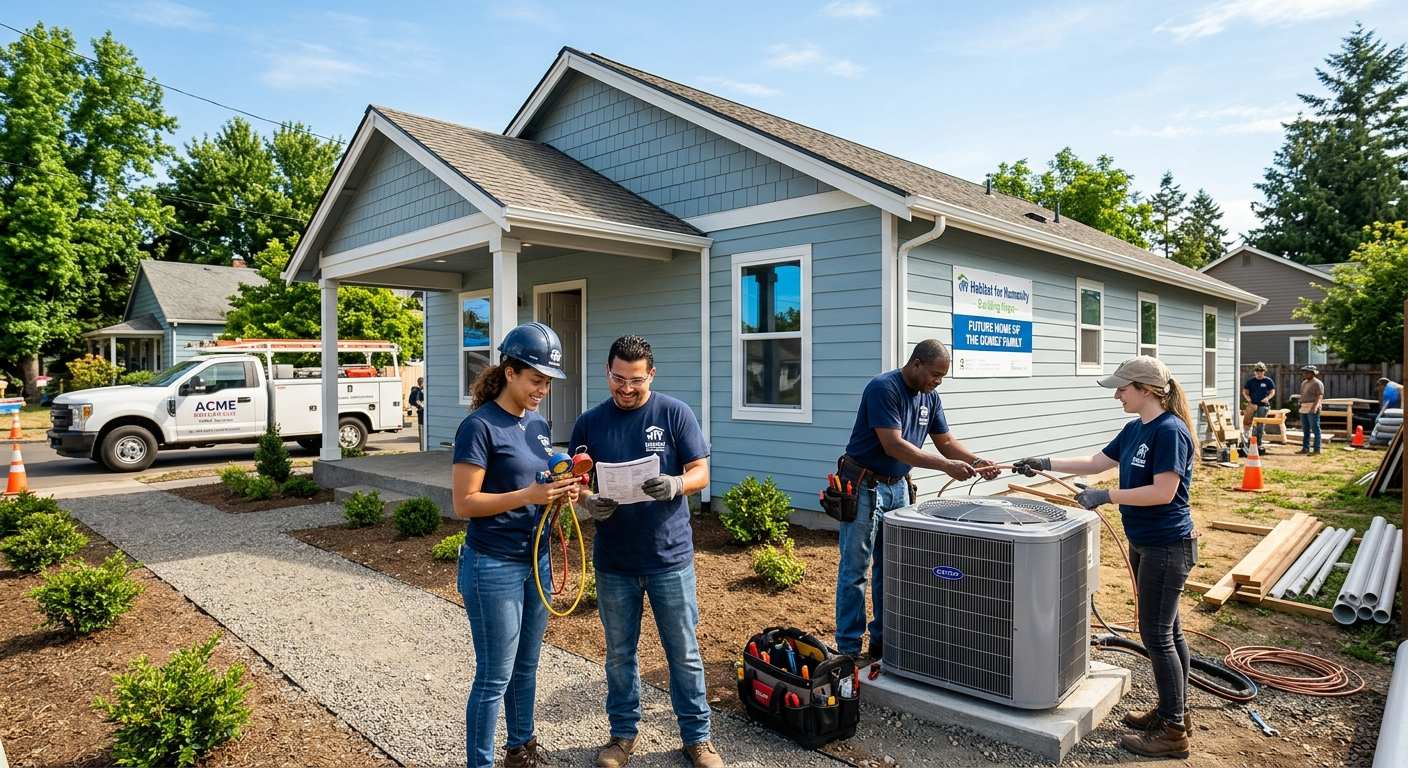
Habitat for Humanity’s HVAC replacement initiatives are essential to its mission of providing safe, affordable, and energy-efficient housing for low-income families. These systems are critical for maintaining indoor air quality and occupant comfort while reducing energy consumption, thus addressing health and financial challenges. By implementing modern, high-performance equipment, such as heat pumps and ductless systems, the organization aims to decrease utility costs and combat energy poverty among families facing financial constraints.
Habitat’s HVAC approach prioritizes sustainability and affordability while ensuring long-term performance. Collaborations with manufacturers and utility programs facilitate access to energy-efficient HVAC systems, paired with advanced construction methods to optimize effectiveness. Engaging homeowners in fulfilling program requirements enhances community involvement and resource management, although challenges such as limited funding and technical constraints can complicate implementation.
Key HVAC Replacement Options
The organization focuses on integrating energy-efficient HVAC systems, like heat pumps, which offer both heating and cooling capabilities. These systems reduce energy consumption and utility bills compared to traditional units, making them well suited for various climates. Habitat for Humanity also emphasizes the installation of modern ductless systems, often supported by manufacturer partnerships that provide affordability without sacrificing reliability.
In addition to equipment selection, advanced building techniques enhance HVAC efficiency, including improved insulation methods and sealed crawl spaces. These strategies contribute to healthier living environments. Coordination with weatherization programs and financial incentives helps maximize the impact of HVAC initiatives, making them more accessible, especially for economically disadvantaged homeowners.
Evaluating HVAC Replacement Factors
Selecting appropriate HVAC systems involves various critical criteria, including safety, energy efficiency, and capacity sizing. Safety remains a priority, as potential hazards can exist even in depowered units. Energy efficiency significantly influences utility costs and aligns with goals of improving housing quality and sustainability. Systems achieving high efficiency ratings, such as 92%, help lower energy usage, ultimately making homes more affordable to operate.
Capacity sizing must adequately reflect local climate conditions to ensure comfort without energy waste. Installation quality and system durability are crucial for long-term performance, requiring thorough coordination and homeowner cooperation in the replacement process. Availability of funding and homeowners’ willingness to engage with Habitat’s model also impacts the feasibility and timing of HVAC projects, while non-standard installations may involve specific repayment arrangements.
Challenges in Implementation
HVAC replacement projects face various challenges that can affect timely completion. Funding availability poses a notable barrier, potentially limiting the scope of replacement initiatives. Homeowner participation is another critical factor, as the success of replacements often relies on their commitment to meet program requirements, which can inadvertently delay service access.
Existing home conditions can complicate installations if structural limitations restrict HVAC system options. Such challenges highlight the importance of careful planning, funding strategies, and homeowner engagement to facilitate the successful implementation of HVAC solutions that are effective and sustainable, particularly for low-income families served by Habitat for Humanity.
Future Directions and Innovations
Looking ahead, Habitat for Humanity is committed to exploring innovative HVAC solutions as part of its dedication to energy efficiency and affordable housing. The organization emphasizes early planning to address client needs and improves HVAC designs for enhanced comfort and sustainability.
Collaborations with municipalities and government entities aim to develop energy-efficient social housing to tackle systemic issues like energy poverty. Projects supported by programs like USAID endeavor to enhance energy performance through multi-apartment renovations. By continually leveraging partnerships and evolving technologies, Habitat for Humanity seeks to create resilient and energy-efficient communities that accommodate the needs of vulnerable populations effectively.
The content is provided by Jordan Fields, ficustolife