Highlights
- Habitat for Humanity’s HVAC programs improve indoor comfort and promote sustainable living for low-income homeowners.
- Engage with us to contribute to energy-efficient solutions for families facing housing challenges.
Summary of HVAC Assistance Programs
Habitat for Humanity’s HVAC Assistance Programs provide energy-efficient heating, ventilation, and air conditioning (HVAC) solutions to low-income homeowners. The main aim is to enhance indoor comfort, reduce energy expenses, and promote sustainable living, particularly for vulnerable groups like seniors and those affected by aging infrastructure or disasters. These initiatives integrate equipment installation with homeowner education, focusing on health and financial stability. However, challenges such as fluctuating funding and operational complexities may impact program delivery.
Eligibility and Participation Factors
Eligibility for HVAC assistance requires applicants to meet specific income thresholds or participate in state or federally funded assistance programs, such as LIHEAP and TANF. The application process prioritizes essential health and safety repairs, excluding cosmetic improvements, and necessitates working with licensed contractors to ensure quality. While the support structure is robust, stringent eligibility criteria and documentation requirements may exclude some potential beneficiaries, limiting access to vital services.
Partnerships and Funding Mechanisms
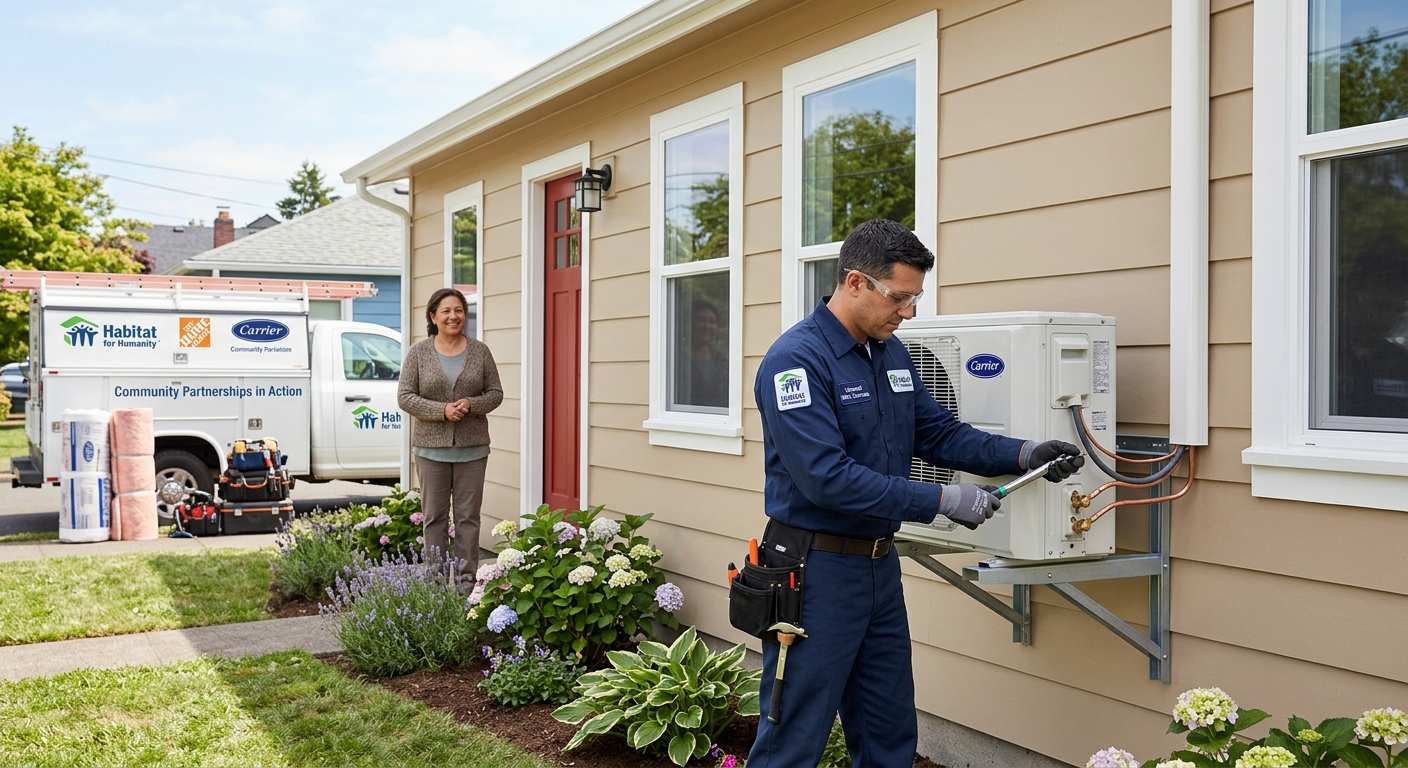
Habitat for Humanity partners with corporate sponsors, governmental agencies, and local organizations to fund and implement its programs. Notable contributors like The Home Depot Foundation and Carrier have played key roles by providing financial support, donating equipment, and facilitating volunteer efforts. Funding sources include federal grants and reinvestment of proceeds from home sales, creating a sustainable financial model. However, fluctuations in funding and reliance on donations can complicate long-term planning and service delivery.
HVAC System Implementation and Design Considerations
The HVAC programs emphasize the installation of energy-efficient systems that cater to specific climatic conditions while ensuring cost savings. Habitat carefully selects HVAC systems based on energy efficiency, comfort, and durability, employing partnerships with manufacturers to offer affordable solutions to low-income households. Maintenance challenges persist, as HVAC systems require regular upkeep to function optimally. Education about system operation is crucial for homeowners to maximize benefits and efficiency.
Impact on Communities and Future Directions
These HVAC assistance programs significantly enhance living conditions for low-income families by providing cost-effective heating and cooling solutions, thus mitigating energy poverty. Community engagement is a key feature, offering skills development opportunities for youth. Future initiatives will further integrate energy-efficient technologies and collaborative approaches, such as the LOCATEE project, which aims to provide targeted support in high-need areas while addressing broader challenges around housing resilience and energy sustainability.
The content is provided by Harper Eastwood, ficustolife