Highlights
- Gutter guards reduce maintenance and prevent home damage, making them essential for homeowners.
- Professional installation ensures optimal performance and protects warranties from potential damage.
Understanding Gutter Guards Installation
Gutter guards prevent debris from clogging gutters, ultimately reducing maintenance, preventing overflow, and protecting homes from water damage. Choosing the right type of gutter guard depends on specific needs, environmental conditions, and the complexity of the installation process. It’s essential to prepare adequately for installation, as improper setup can lead to performance issues and even damage to gutters or roofs.
Types of Gutter Guards
Different gutter guards serve varying purposes, all designed to keep gutters clear of debris while allowing free water flow. The primary types include screen guards, micro-mesh guards, brush guards, foam guards, hooded guards, and reverse-curve guards. Each type varies in effectiveness and maintenance needs, so selecting an appropriate option is crucial based on the specific environment and debris type around the home.
Screen and Mesh Guards
Screen and mesh guards use a fine mesh material to keep out larger debris while allowing rainwater to flow in. Micro-mesh guards further enhance filtration capabilities by blocking even smaller particles like sand and pine needles. Choosing materials like stainless steel provides long-lasting durability against environmental factors.
Brush and Foam Guards
Brush guards use bristles to catch larger debris but require regular maintenance to prevent clogging. Foam guards block larger particles but can deteriorate quickly and may lead to clogs if not monitored properly. Understanding these limitations is key to maintaining their effectiveness.
Hooded and Reverse-Curve Guards
Hooded guards block debris while directing rainwater into the gutter, but may necessitate complete gutter replacement. Reverse-curve guards handle water effectively but require precise installation, making professional help advisable for optimal performance.
Benefits of Installing Gutter Guards
Gutter guards enhance gutter efficiency by reducing maintenance needs and preventing water-related damage to roofs and foundations. Properly selected and installed guards allow for effective rainwater flow while limiting debris accumulation. Although they can significantly lessen maintenance efforts, homeowners still need to inspect and clean the guards regularly to maintain their functionality.
Tools and Materials Needed for Installation
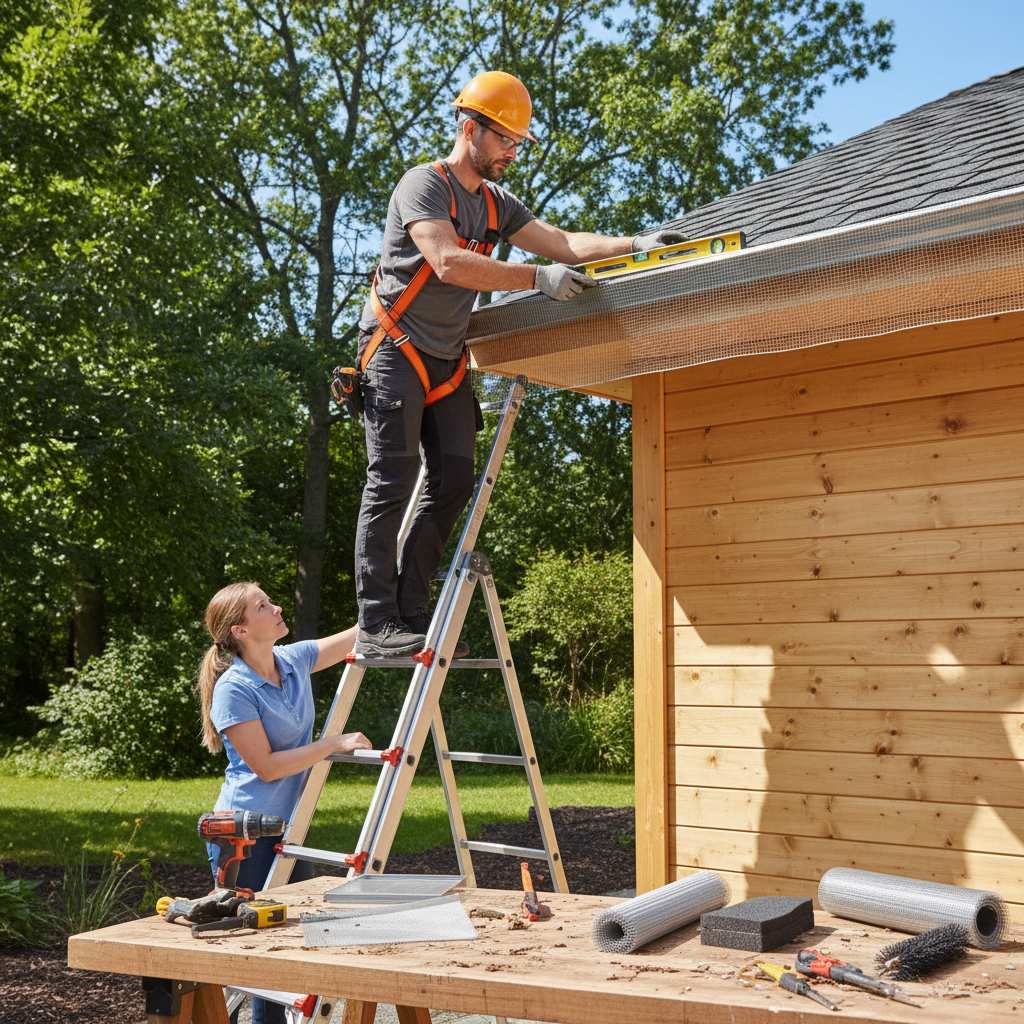
Gathering the right tools is essential for a successful gutter guard installation. Key tools include a sturdy ladder, measuring tape, cutting tools like tin snips, and fasteners such as self-tapping screws. Ensuring safety measures are in place before installation will facilitate a smoother process and minimize risks.
Preparation Before Installation
Thorough cleaning and inspection of existing gutters is critical before installing guards. Accurate measurements and ensuring the structural integrity of the system will prevent performance issues later. Adequate planning allows for a smoother installation, whereas neglecting these steps may lead to increased costs and time spent resolving issues.
Installation Process
Effective installation hinges on precise technique and orderly preparation. Whether opting for DIY or professional installation, crucial steps include thorough cleaning and accurate measuring of the gutters, as well as addressing any structural issues in advance. Following guidelines closely during the installation process minimizes errors and maximizes the guards’ effectiveness.
DIY Installation Considerations
DIY installations require careful measurement and proper technique to avoid common mistakes, particularly for specific types of guards that may need more skill or experience. Only tackle DIY if comfortable with the product requirements, as misinstalling complex systems may lead to future issues.
Professional Installation Advantages
Choosing professional installers provides assurance that gutter guards are attached correctly, minimizing the likelihood of future repair needs. They also offer warranties, protecting against performance issues that may arise from improper installation.
Maintenance and Long-Term Care
Regular inspections and cleaning are vital to ensure gutter guards function effectively over time. Homeowners should check for clogs and clean guards periodically to maintain their protective qualities. Professional servicing can significantly enhance longevity, particularly if maintenance has been overlooked.
Common Installation Mistakes and How to Avoid Them
Common mistakes, like using incorrect fasteners or failing to follow proper pitch, can hinder guard effectiveness. Skipping critical pre-installation inspections may also result in inadequate setup, necessitating costly adjustments later. Knowing these pitfalls and ensuring attention to detail minimizes the risk of installation issues.
Cost and Budget Considerations
When evaluating gutter guard options, understanding the related costs is critical. Material costs can vary widely based on the type of guard chosen, and professional installation could further increase the overall project budget. While upfront costs are important, factoring in potential long-term savings from reduced maintenance is essential to gauge the true value of the investment.
The content is provided by Sierra Knightley, ficustolife