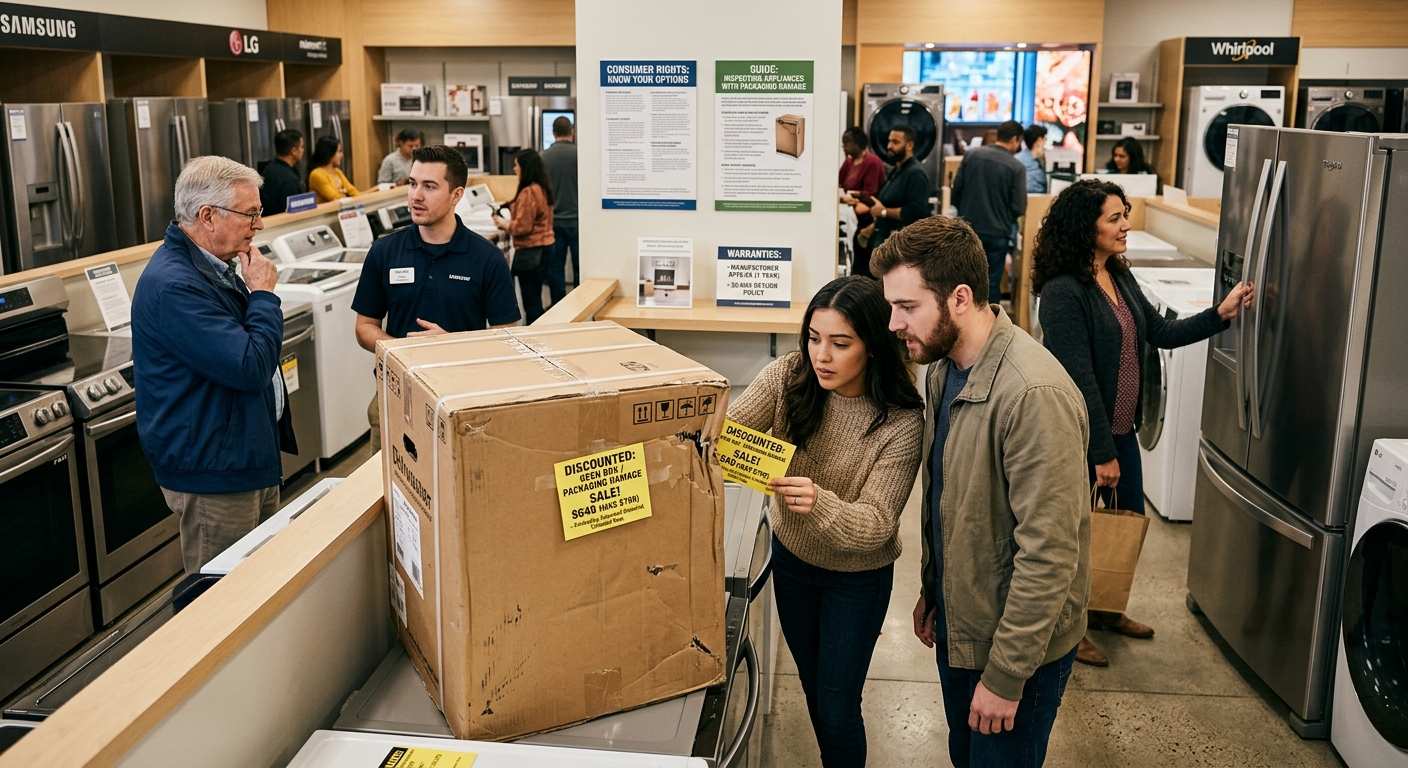
Highlights
- Understanding packaging damage empowers buyers to make informed, confident appliance purchases.
- Learn how to navigate warranties and retailer policies for scratch and dent appliances.
Summary
How to Buy Appliances with Packaging Damage: A Practical Guide provides valuable insights for consumers considering the purchase of appliances with packaging defects like dents or tears. Understanding these flaws is essential as they may indicate product tampering or hidden defects. The guide highlights the need for consumers to evaluate packaging damage carefully and offers strategies to minimize potential risks as they decide on their purchases.
Understanding Packaging Damage
Packaging damage consists of visible flaws on the exterior that can suggest serious underlying issues with the appliance itself. Factors such as insufficient cushioning and inadequate sizing during shipping contribute to these imperfections. Recognizing the signs of packaging compromise, like water stains or dents, can be pivotal in assessing the safety and integrity of the appliance before completing a purchase.
Common causes of packaging damage include environmental factors, poor materials, and mishandling during transit. For example, moisture exposure can lead to corrosion, while inadequate padding may not protect sensitive electronic components effectively. Buyers should therefore be alert to these signs and consider how they may affect the appliance’s condition upon delivery.
Packaging Materials and Protection Methods
Selecting the right packaging materials is crucial for ensuring that appliances arrive undamaged. Materials such as heavy-duty foam, bubble wrap, and rigid cardboard panels are designed to provide optimal protection based on the specific requirements of different appliances. For larger items, specialized edge protectors can absorb impacts, minimizing potential damage during shipping.
Moreover, internal features like drum locks in washers are essential for keeping internal components secure, preventing additional damage from movement during transit. Consumers should familiarize themselves with these protective measures when assessing the quality of the packaging.
Assessing the Appliance at Delivery
Thorough inspections upon delivery are critical to ensuring that the appliance is in good condition. Check for visible damage on the packaging and the appliance itself before signing off on the delivery. Actions such as taking photographs of any defects can help document issues for future reference and strengthen claims with retailers if needed.
Upon opening the packaging, testing the appliance’s functions—like ensuring lights, dispensers, or heating elements work—is vital. Minor cosmetic defects may not affect performance, but any missing parts should be reported immediately to facilitate a proper resolution with the delivery team.
Distinguishing Packaging Damage from Appliance Damage
Understanding the difference between packaging damage and appliance damage is essential for buyers. While packaging flaws might suggest potential issues, they do not always indicate that the appliance itself is damaged. However, superficial blemishes can compromise the integrity of the packaging, leading to safety concerns or product tampering that may affect long-term performance.
In addition, recognizing potential internal damage—like electronic failures due to shocks during shipping—is critical. Buyers should be vigilant about inspecting both the packaging and the appliance to identify any functional issues before accepting delivery.
Consumer Rights and Protections
Consumers are protected under various laws when purchasing appliances with packaging damage. Federal and state laws ensure that products are safe and free from hidden defects, backed by both implied and express warranties. Such protections can provide peace of mind, but consumers should actively monitor their rights and understand the requirements for claiming damages or pursuing returns.
Knowing the details of warranty coverage is also essential, particularly with damage or defects that may not be instantly visible. Reporting problems promptly while warranties are in effect is critical for upholding those rights.
Retailer Policies for Appliances with Packaging Damage
Policies regarding appliances with packaging damage vary significantly across retailers. Many label these items as “scratch and dent,” offering discounts but potentially complicating return procedures. Understanding specific return policies is crucial as they may differ by retailer or even by the type of appliance.
Return windows and conditions for returns on discounted items can sometimes affect the buyer’s recourse options significantly, making it necessary to inquire about these aspects before proceeding with a purchase.
Risks and Common Issues When Buying Appliances with Packaging Damage
Purchasing appliances with packaging damage comes with potential risks, including both cosmetic and functional problems. Statistics show that a notable percentage of deliveries sustain damage, often due to factors like insufficient padding or mishandling during transit. This reality makes it imperative for buyers to conduct comprehensive checks upon delivery.
The financial implications of such decisions can affect not only consumers but also retailers, requiring robust communication and thorough inspection upon receipt to mitigate any detrimental outcomes. Understanding common issues can empower buyers to make better-informed choices.
Practical Tips for Consumers
To ensure a satisfactory purchase experience, consumers should prioritize thorough inspections upon delivery. Inspect the packaging and appliance for visible defects and defects, immediately testing core operations to confirm functionality. When considering open-box options, inquire about the product’s background to understand its condition better.
If any damage is detected, documenting it promptly with photographs and retaining packaging materials is vital to support claims with retailers. Engaging in timely communication with sellers fosters a smoother resolution process, encouraging transparency and accountability.
After-Purchase Care and Maintenance
Following delivery, buyers should carefully document the appliance’s condition to establish a baseline for warranty use. If defects are identified, proactively addressing them with the seller can facilitate refunds or repairs. Understanding warranty terms is equally vital for ensuring coverage against future issues.
Investing in quality packaging solutions by retailers can enhance customer experience and reduce damage risks in future shipments. Staying informed about product recalls and knowing consumer rights is essential for long-term satisfaction.
Safety Considerations
Safety should be a top concern when purchasing an appliance with packaging damage, as it often indicates potential hazards. Early inspection for defects can mitigate the risk of using unsafe products. Employing mechanical measures during transport can help detect mishandling, while robust packaging remains crucial for protecting fragile components.
Effective communication with sellers about inspection procedures and understanding return policies ensures that any necessary follow-up addresses both safety and performance concerns.
Frequently Asked Questions
Q: Can I return appliances with damaged packaging? Returns for items with damaged packaging are often subject to specific retailer policies and may not disqualify an item, but they may affect the return process.
Q: Are discounted appliances with damaged packaging covered by protection plans? Clarity around protection plans for discounted and damaged products is often limited, prompting potential concerns among consumers and impacting purchasing decisions.
Q: How do retailers manage labeling and packaging standards for appliances? Adherence to consistent labeling practices helps ensure transparency throughout the retail process, even amidst variations in packaging quality.
The content is provided by Jordan Fields, ficustolife