Highlights
- Habitat for Humanity enhances home comfort and efficiency through upgraded HVAC systems.
- Financial assistance and volunteer opportunities foster community engagement in energy-saving initiatives.
Summary
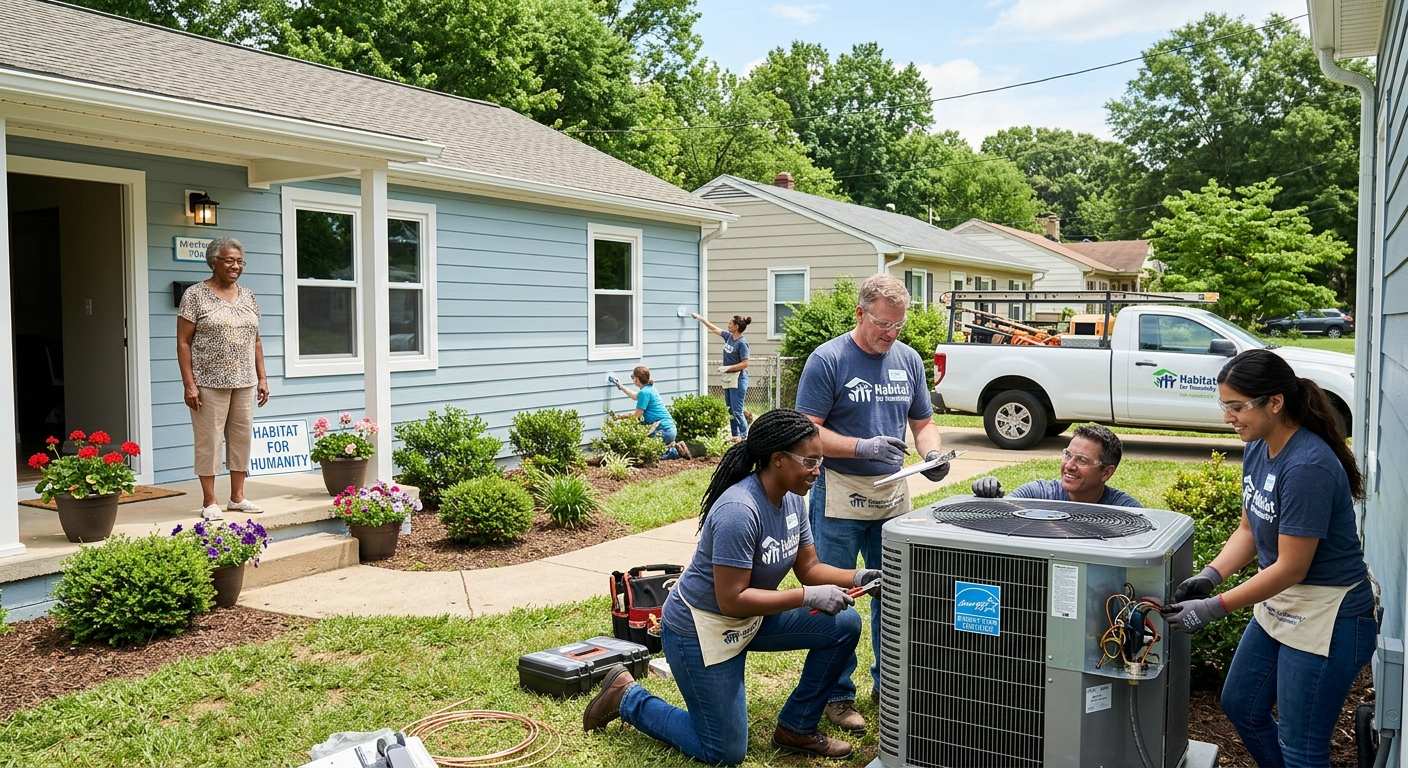
Habitat for Humanity assists low- and moderate-income homeowners in replacing aging heating, ventilation, and air conditioning (HVAC) systems, aiming to enhance home comfort, energy efficiency, and safety. Older systems often exhibit decreased reliability and increased energy consumption due to outdated technology, resulting in higher utility costs and poorer indoor air quality. Habitat’s programs address these challenges by offering home repairs and upgrades, including the installation of ENERGY STAR-certified HVAC units that help reduce energy use and lower monthly expenses. Financial assistance is structured on a sliding scale, allowing homeowners to contribute based on their capacity. Despite progress, challenges remain, including financial constraints for low-income families and the need for effective communication about new systems.
Challenges in HVAC System Replacement
Replacing HVAC systems poses several challenges for Habitat for Humanity and participating homeowners. A significant barrier involves ensuring homeowners understand their systems and the benefits of scheduled upgrades, necessitating clear communication from program staff. Variability in housing types and locations affects the applicability of newer technologies, complicating the selection of appropriate HVAC solutions. Additionally, although a sliding scale for repayments aids affordability, costs can still burden low-income families, particularly when other urgent repairs are needed. Safety concerns can postpone or restrict certain HVAC projects, as Habitat prioritizes health and safety over cosmetic upgrades.
Criteria for Repair vs. Replacement
Deciding whether to repair or replace an aging HVAC system hinges on several factors. Repairs may be pursued if systems can be restored cost-effectively; however, replacement becomes necessary if the system is outdated or inefficient. Energy efficiency remains a crucial consideration, with newer technologies like heat pumps offering significant savings on utility bills. The program does not fund cosmetic upgrades, focusing instead on health and safety needs. Assistance is tailored based on household income, which ensures support is accessible while promoting homeowner empowerment through shared financial responsibility.
Measuring Energy Efficiency Improvements
Accurate measurement and verification of energy efficiency improvements are essential to realize the potential benefits of HVAC replacements. ENERGY STAR-certified systems typically offer around 20% greater efficiency compared to non-certified models. To ensure these savings materialize, certified energy raters execute on-site evaluations, confirming compliance with ENERGY STAR standards. Pre-installation energy audits enable targeted interventions to maximize overall home performance. Through this rigorous assessment process, homeowners can anticipate significant gains in comfort and reductions in energy costs.
Future Directions and Initiatives
Habitat for Humanity is advancing its initiatives in energy efficiency and affordable housing through innovative partnerships. Collaborations at the state level, such as with the North Carolina Sustainable Energy Association, enhance engagement with energy-related legislative efforts. Internationally, projects like JUSTEM and SMARTER4EU focus on supporting vulnerable populations in energy transitions and sustainable housing improvements, respectively. These initiatives aim to tackle energy poverty and promote sustainable practices, demonstrating Habitat’s alignment with broader environmental goals and the necessity for energy-efficient solutions in housing.
The content is provided by Jordan Fields, ficustolife