Highlights
- The active adult community market is projected to exceed $114 billion by 2035.
- Innovative amenities and social opportunities make these communities ideal for active retirees.
Summary
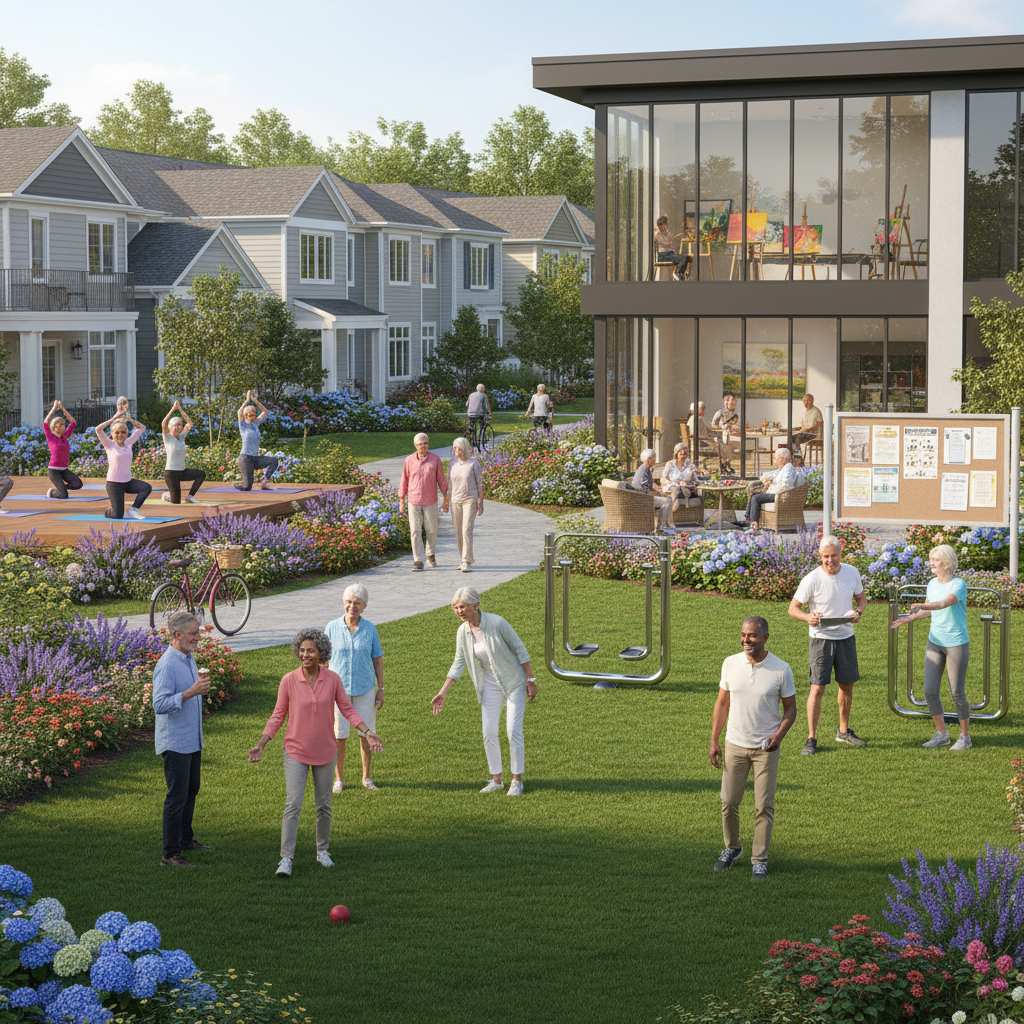
Active adult communities are residential neighborhoods designed primarily for individuals aged 55 and older, emphasizing an independent, active, and socially engaging lifestyle distinct from traditional retirement or assisted living facilities. These communities often enforce age restrictions and provide low-maintenance housing options such as single-family homes, townhouses, and condominiums, supported by homeowners’ associations that manage exterior upkeep. Central to their appeal are extensive amenities and programs focused on wellness, fitness, and social connectivity, fostering vibrant, peer-oriented environments where residents can pursue hobbies, participate in clubs, and enjoy outdoor recreational activities in scenic settings.
The active adult community market is experiencing robust growth, driven by demographic shifts including a 32.8% increase in the population aged 60 and older from 2013 to 2023 and changing lifestyle preferences among retiring baby boomers. Market projections anticipate a compound annual growth rate (CAGR) of 9.36% between 2025 and 2035, with total market value expected to exceed $114 billion by 2035. Leading communities, such as On Top of the World in Florida and Pine Village in Arizona, exemplify this growth with their diverse housing, upscale amenities, and strong social cultures that attract active adults nationwide.
Rankings of top active adult communities for 2025 consider factors including health and wellness amenities, social engagement opportunities, technological innovations like smart home integration, and geographic desirability. These rankings highlight regional trends, with strong representation in states such as Florida, North Carolina, and South Carolina, reflecting migration patterns as retirees seek affordability, quality of life, and proximity to urban centers or natural attractions. Pricing and sales dynamics vary widely across markets, influenced by local demand, inventory levels, and community-specific features.
Controversies and challenges within the sector include balancing age-restriction policies with inclusivity goals, addressing diversity within predominantly homogeneous populations, and managing affordability amid rising housing costs. Additionally, fluctuating migration trends and economic pressures impact community sustainability and resident satisfaction. Nevertheless, ongoing innovations in technology, wellness programming, and sustainable design are reshaping active adult communities into vibrant, future-ready environments that support aging with autonomy, health, and social fulfillment.
Defining Characteristics of Active Adult Communities
Active adult communities are residential neighborhoods primarily designed for individuals aged 55 and older, emphasizing an independent and vibrant lifestyle. These communities typically impose a 55+ age restriction for residents, with some exceptions allowing younger adults to live with legal guardians or family members. Unlike traditional retirement communities, active adult neighborhoods focus on promoting an active, social, and engaging environment rather than solely providing assisted living services.
Housing options in active adult communities often include single-family homes, townhouses, or condominiums that feature low-maintenance or maintenance-free exteriors. While homeowners are responsible for interior upkeep, exterior maintenance is generally managed through homeowners’ association (HOA) fees, reducing daily chores and allowing residents more leisure time. Many residents opt to downsize into smaller, simpler living spaces to better suit their retirement lifestyle and ease of maintenance.
A hallmark of these communities is their emphasis on social connectivity and wellness. Residents are encouraged to participate in a wide range of recreational activities, fitness classes, clubs, and organized excursions that foster both physical and mental well-being. Amenities are designed to support an active lifestyle, providing opportunities for exercise, lifelong learning, and community engagement within a mostly quiet, kid-free environment.
Geographically, active adult communities are often located in scenic areas, enabling residents to enjoy beautiful landscapes and outdoor recreational options that complement their wellness-focused lifestyle. The overall environment balances independence with access to necessary support services, ensuring safety while nurturing an inclusive and dynamic community.
Moreover, distinctions exist between age-restricted communities, which legally enforce minimum age requirements, and age-targeted communities, which appeal to older adults without formal restrictions. These differences influence regulatory frameworks and marketing strategies, but both types commonly prioritize amenities that enhance lifestyle, security, maintenance, and wellness.
In sum, active adult communities cater to discerning adults seeking a blend of comfort, social engagement, and maintenance-free living, with some luxury developments offering premium residences and upscale amenities tailored to elevate the retirement experience.
Criteria for Ranking Top Active Adult Communities in 2025
The ranking of the top active adult communities in 2025 is based on a combination of factors that reflect resident preferences, market trends, and community offerings. Central to these criteria is the emphasis on health, wellness, and social engagement, which are considered paramount by the active adult demographic. Communities that provide a vibrant social scene alongside excellent healthcare facilities tend to stand out in evaluations.
Key amenities play a critical role in the rankings. These often include fitness centers with comprehensive class schedules, outdoor recreational spaces such as dog parks and barbecue areas, clubhouses, and common areas designed to encourage socialization, such as bars or pubs with liquor lockers. Concierge services and proximity to urban centers or recreational areas also add significant value.
Market segmentation and resident profiles are carefully analyzed to inform rankings. Factors such as age, gender, community format, and whether the community is age-restricted or age-targeted influence both the regulatory framework and the marketing approach. This segmentation helps in understanding resident needs for independence balanced with support services, which is a defining characteristic of active adult communities.
The rankings also consider the integration of innovative features, such as smart home technology partnerships recently introduced by leading developers like Lennar, which appeal to residents seeking modern, convenient living environments. Moreover, growth projections, such as the expected compound annual growth rate (CAGR) of 9.36% for the active adult community market from 2025 to 2035, reflect the sector’s robust demand, particularly among the 65-74 age group.
Finally, personal experiences and community culture are integral to the ranking process. Testimonials from residents, opportunities to engage in community events, and the overall atmosphere of inclusiveness and active lifestyle contribute to a community’s desirability and ranking. The ability of a community to foster new friendships, hobbies, and sustained activity without catering to intensive medical care needs also differentiates top-ranked communities.
Overview of Top Active Adult Communities for 2025
As 2025 concludes, the landscape of active adult communities across the United States highlights a growing and dynamic market catering to the needs and preferences of older adults seeking vibrant, low-maintenance lifestyles. These communities, often referred to as active adult neighborhoods, typically impose age restrictions—usually targeting residents aged 55 and older—and are designed to support retirement-friendly living without the medical care aspects of senior or assisted living facilities.
The active adult community market is experiencing robust growth, fueled by demographic trends such as the aging baby boomer population. In 2024, the market size was valued at approximately USD 635.5 billion, with projections estimating growth to USD 906.6 billion by 2033 at a compound annual growth rate (CAGR) of 4.02%. More broadly, forecasts indicate the market could reach USD 114.47 billion by 2035, expanding at an even higher CAGR of 9.36% due to rising demand and evolving consumer preferences.
Communities tend to be relatively new, with a median age of less than 10 years, and typically feature larger living units compared to traditional independent living facilities. The median size of these rental communities is about 138 units, closely aligning with the 144-unit median seen in independent living communities. Occupancy rates remain strong, with stabilized properties reporting nearly 96% occupancy on average in early 2025.
Understanding resident demographics and preferences is critical to the continued success of these communities. Segmentation by age, gender, amenities, and community format informs design, pricing, and marketing strategies. Distinctions between age-restricted communities, which enforce minimum age requirements, and age-targeted communities, which market to older adults without formal restrictions, create different regulatory and strategic considerations for developers and operators.
The rapid growth of the older adult population—up 32.8% from 2013 to 2023 compared to a 5.9% overall population growth—combined with financial pressures in major urban centers, underscores the importance of accessible, appealing active adult communities. These factors contribute to a diversification of market offerings and geographic expansion, reshaping the active adult community landscape nationwide.
Detailed Profiles of Selected Communities
The 25 most popular active adult communities for 2025 reflect a diverse range of lifestyles, amenities, and geographic locations, with a strong presence in Florida and North Carolina, each boasting five winners, followed by South Carolina and Virginia with three communities apiece. Notably, Pine Village in Flagstaff, Arizona, stands out as the only western community making the top 25 list.
Among the largest and most notable communities is On Top of the World in Ocala, Florida. This community offers over 10,000 spacious, high-end homes spread across distinctive neighborhoods, each providing unique recreational opportunities. Residents frequently enjoy the numerous interconnected biking and walking trails that link neighborhoods. In addition to outdoor activities, On Top of the World provides an array of on-site amenities such as a library, book club, aerobics studio, fitness center, and tennis courts, all designed to promote an active and socially engaging lifestyle right at residents’ doorsteps.
Active adult communities generally prioritize amenities that enhance health, wellness, and social engagement. Popular features include fitness centers, swimming pools, clubhouses, and activities coordinators, which facilitate a vibrant and connected community atmosphere. These amenities cater to a variety of interests, from fitness classes and educational workshops to social clubs and community events, fostering lifelong learning and wellness among residents.
Many communities offer a mix of housing options such as single-family homes, condominiums, and multifamily apartments, often situated near urban centers or scenic recreational areas. This strategic positioning allows residents easy access to healthcare, shopping, dining, and entertainment, while also providing beautiful landscapes and outdoor recreation opportunities.
The design and operation of these communities focus on providing a comfortable and convenient environment for adults predominantly aged 55 and older. By restricting residency by age, these communities cultivate a peer environment where residents share similar life stages, interests, and goals. This promotes autonomy and independence while encouraging social interaction through organized clubs, excursions, and community events.
In sum, the detailed profiles of top active adult communities for 2025 reveal a balanced approach to luxury living, health and wellness, social engagement, and location appeal, which together create dynamic and supportive neighborhoods tailored for active adults.
Amenities and Lifestyle Offerings in Top Communities
Top active adult communities in 2025 emphasize a blend of luxury, wellness, and social engagement tailored to the needs of residents aged 55 and older. These communities offer a wide array of amenities designed to foster an active, independent, and vibrant lifestyle while promoting physical and mental well-being.
Resort-style pools, state-of-the-art fitness centers, and athletic courts are among the most popular features, often complemented by clubhouses and social halls that serve as hubs for community interaction and events. Many communities provide specialized facilities such as spas with steam rooms and private treatment suites, as well as luxury restaurants with both indoor and outdoor seating, contributing to an elevated living experience.
Outdoor recreation is a key focus, with many neighborhoods including numerous pools, tennis and pickleball courts, bocce ball areas, and golf courses. Some larger communities boast multiple 18-hole golf courses, miles of walking trails, and lakes for fishing, creating diverse opportunities for leisure and fitness. Social spaces like town squares and performance centers offer venues for concerts, farmers markets, and other cultural activities, enriching the social fabric of these communities.
Residents frequently organize affinity clubs, volunteer groups, and social events, fostering a strong sense of community and encouraging active participation. Common areas often feature amenities such as bars or pubs with liquor lockers, outdoor kitchens and barbecue areas, dog parks, and concierge services, supporting both socialization and convenience. Maintenance-free or low-maintenance exteriors managed through homeowners’ association dues reduce the burden of upkeep, allowing residents to focus on enjoying their lifestyle.
Social and Recreational Activities: Impact on Residents
Active adult communities are designed to foster an environment where residents can maintain an independent and vibrant lifestyle through a variety of social and recreational activities. These communities encourage residents to pursue hobbies, stay physically active, and engage with neighbors, creating a strong sense of community and belonging. Social events such as classes, speaker sessions, parties, and group outings are regularly organized by both staff and residents, enabling individuals to make new friends and explore new interests within the community.
The availability of affinity clubs, volunteer groups, and organized excursions provides multiple avenues for residents to remain mentally and physically stimulated. This focus on wellness and engagement helps promote overall well-being and can lead to improved quality of life for residents. While residents are generally responsible for interior home maintenance, many communities offer low-maintenance exteriors supported through homeowners’ association dues, which helps reduce day-to-day upkeep concerns and allows more time for social involvement.
Personal testimonials highlight that these active lifestyles and robust social opportunities contribute significantly to residents’ satisfaction and sense of fulfillment. Prospective residents are often encouraged to visit communities and participate in events to experience firsthand the positive atmosphere created by these social and recreational offerings. Communities with a strong balance of healthcare resources and a vibrant social scene tend to stand out, enhancing both physical health and social connectedness among residents.
Diversity and Inclusivity in Active Adult Communities
Active adult communities are increasingly recognizing the importance of diversity and inclusivity in shaping vibrant and engaging living environments. Moving beyond the traditional view of retirement homes as mere residences for aging individuals, these communities are evolving into dynamic spaces where varied experiences, identities, and cultural backgrounds contribute to a richer collective life. By fostering an environment that celebrates diversity, active adult neighborhoods can encourage social activation and a greater sense of belonging among residents.
This cultural shift aligns with broader trends emphasizing wellness, social engagement, and community-building tailored to adults in similar life stages. Age restrictions, commonly set at 55+, create a comfortable and convenient environment for residents, but integrating diversity initiatives ensures that this demographic is not homogeneous but representative of varied perspectives and lifestyles. Such inclusivity enhances residents’ opportunities for meaningful social connections, as active adult communities prioritize community-first approaches that encourage interaction through clubs, excursions, and shared interests.
Furthermore, the design and operation of active adult communities are adapting to reflect diverse resident preferences. This includes accommodating different cultural norms and values, particularly in regions like Europe, the Middle East, and Africa, where intergenerational living and public health systems influence community programming and services. Operators are tasked with balancing localized, culturally sensitive offerings while maintaining scalable, inclusive platforms that serve a broad range of individuals.
Demographic Trends and Migration Patterns Influencing Growth
The growth of active adult communities is closely tied to broader demographic trends and shifting migration patterns among the older population in the United States. From 2013 to 2023, the population of adults aged 60 and older grew by 32.8%, significantly outpacing the national average growth rate of 5.9%. This rapid increase in the senior population has created mounting financial pressures and challenges for cities across the country, as highlighted in a Pew Charitable Trusts analysis of 18 major metropolitan areas.
In 2024, approximately 258,000 Americans relocated specifically for retirement, marking a substantial 23.8% decrease from the previous year. Despite this decline, retirees are notably more likely than the average mover to relocate across state lines, with 32.2% moving out of state compared to only 16.2% of the general population. This higher mobility among retirees reflects their pursuit of destinations that better align with their financial, tax, and lifestyle preferences.
Migration studies focusing on populations aged 60 and older across 164 large U.S. cities reveal that retirees often prioritize locations offering a favorable balance of affordability, quality of life, and social opportunities. These movements have significant implications for local economies, influencing housing markets, tax bases, and the broader business environment. Retirees’ comparatively lower risk tolerance for market fluctuations drives their interest in communities that can provide financial security alongside fulfilling lifestyles.
Developers
Pricing Trends and Market Dynamics for 2025
The active adult community market in 2025 is characterized by significant shifts in pricing and sales activity across various geographic regions, reflecting evolving buyer preferences and demographic changes. Notably, markets such as Southern Pines, North Carolina, and California’s Bay Area have experienced substantial surges in home closings, with increases of 66.7% and 41.7% respectively, indicating heightened demand in these locations. Conversely, several key markets including Austin, Texas (-16.3%) and Denver, Colorado (-14%) have seen notable price declines, creating more affordable opportunities for prospective retirees and active adults.
Florida’s market displays mixed trends; while Southeast Florida has witnessed both an inventory surplus and a price decline of 11.2%, other areas like Tampa and Central Florida have remained relatively stable in pricing and inventory levels. Meanwhile, in Orange County, the average listing price of homes within 55+ communities rose modestly by 4.4%, and the closing price increased by 10.6%, with the median listing price hovering in the mid $500,000s. However, the availability of age-restricted homes remains limited, as only about 1% of these homes are actively listed, narrowing choices for buyers.
Understanding these market shifts requires segmentation by resident and buyer profiles, including factors such as type of community, amenities, age, gender, and community format. Distinctions between age-restricted communities—those enforcing minimum age requirements—and age-targeted communities—marketing to older adults without formal restrictions—impact both regulatory considerations and marketing strategies. Additionally, broader industry developments and strategic investments continue to reshape the market landscape, with ongoing diversification of products and entry into untapped geographic regions.
Taken together, these pricing trends and market dynamics illustrate a complex and evolving active adult community market in 2025, marked by regional variability, changing consumer expectations, and innovative approaches to community design and service delivery.
Choosing the Right Active Adult Community
Selecting the ideal active adult community involves considering several factors to ensure the environment aligns with one’s lifestyle, preferences, and needs. Active adult communities typically cater to individuals aged 55 and older who seek an independent yet engaging retirement lifestyle, often characterized by low-maintenance living spaces such as single-family homes, townhouses, or condominiums.
A key aspect to evaluate is the range of amenities offered, which commonly include fitness centers with scheduled classes, pools, clubhouses, outdoor kitchens, dog parks, and concierge services. These features are designed to foster wellness, social interaction, and convenience, supporting both physical and mental well-being. Proximity to urban centers or scenic recreational areas is another important consideration, as it allows residents to enjoy outdoor activities and easy access to essential services.
Prospective residents are encouraged to visit potential communities in person. Touring floor plans, exploring clubhouses, and experiencing the overall atmosphere can provide valuable insights into the daily life and social environment of the community. Immersing oneself in these surroundings helps clarify whether a community’s culture and offerings are a good match.
Additionally, financial considerations such as budget, tax implications, and overall cost of living play a significant role in the decision-making process. Many retirees move not only for lifestyle improvements but also to better suit their financial situations. Consulting with real estate experts and utilizing resources that highlight popular communities can assist in making an informed choice tailored to individual priorities.
Ultimately, choosing the right active adult community involves balancing lifestyle desires, wellness opportunities, social engagement, location benefits, and financial feasibility to create a fulfilling retirement experience.
Future Trends and Innovations in Active Adult Communities
The active adult community market is experiencing significant growth and transformation, driven by evolving resident preferences and advancements in technology. Projected to grow at a compound annual growth rate (CAGR) of 9.36% from 2025 to 2035, the market is expected to expand from 46.78 billion USD in 2025 to 114.47 billion USD by 2035. This growth reflects increasing demand for age-appropriate amenities and lifestyle options that promote convenience, wellness, and social engagement.
One major trend is the integration of smart home technologies into active adult communities. In September 2025, Lennar partnered with a technology firm to introduce advanced smart home features designed to enhance convenience, safety, and connectivity for residents. Such innovations allow seniors to maintain independence while benefiting from modern automation and remote monitoring systems. This technological shift aligns with the health-conscious and active lifestyle that many residents prioritize.
Wellness and fitness programs tailored specifically for seniors are also becoming central to community design and operations. These programs aim to keep residents physically active and socially engaged, thereby improving overall quality of life. Communities are increasingly incorporating amenities and services that support health and well-being, from exercise facilities to organized clubs and social events, although many activities remain resident-driven rather than managed by onsite staff.
Sustainability is another emerging focus, with developers investing in eco-friendly housing solutions to meet the growing environmental awareness among residents and stakeholders. This includes energy-efficient building practices and landscaping that reduce maintenance burdens while supporting greener living environments.
The collective impact of these trends is reshaping active adult communities into vibrant, technologically equipped neighborhoods that cater to an independent yet socially connected lifestyle. Residents benefit from a quiet, mostly kid-free environment that encourages pursuing hobbies, staying active, and fostering community bonds. Personal testimonials and community visits remain valuable tools for prospective residents to understand and experience these evolving lifestyles firsthand.
The content is provided by Jordan Fields, ficustolife