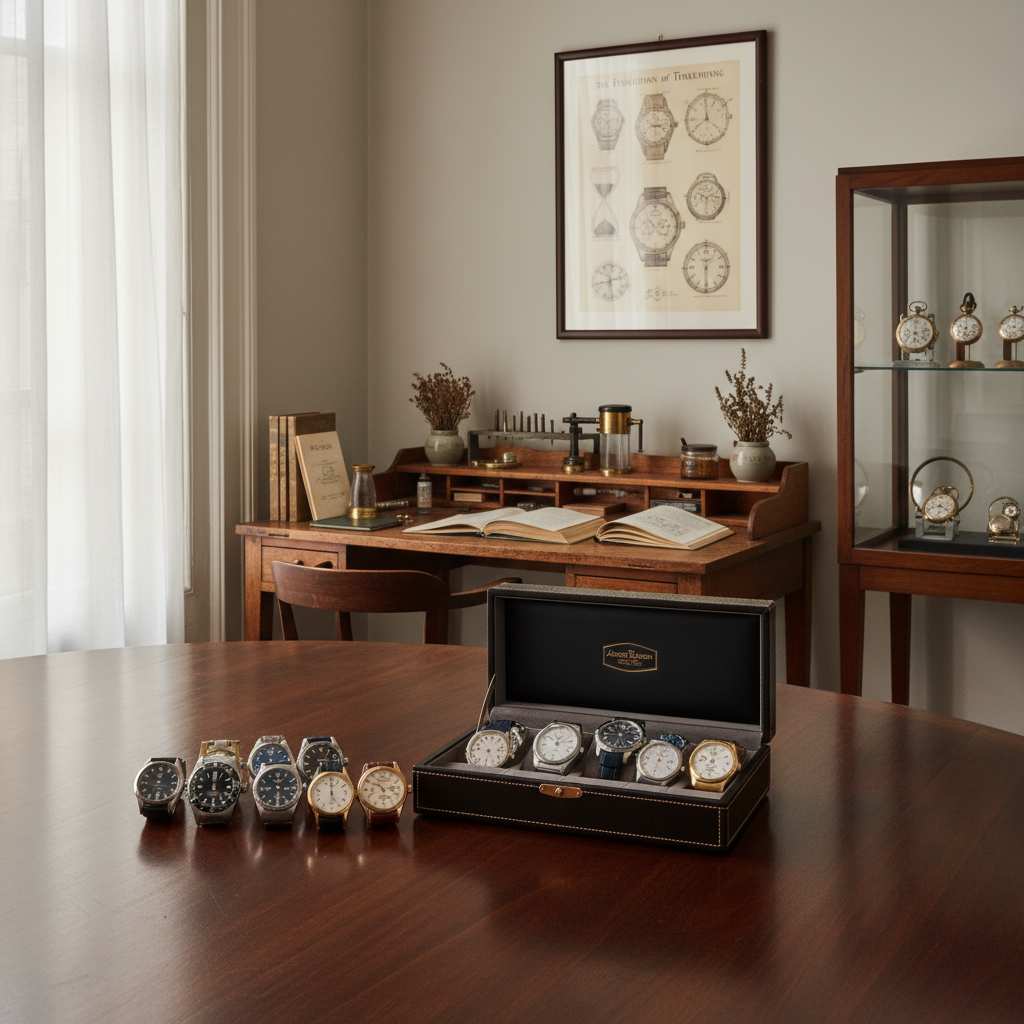
Highlights
- Discover valuable timepieces in your collection before the market appreciates them further.
- Balancing artistry with investment potential unveils hidden treasures in luxury watches.
Summary
Discover Hidden Treasures: Valuable Watch Brands You Own explores the intricate world of luxury watches, focusing on how collectors and enthusiasts can identify valuable timepieces within their personal collections. This topic highlights the significance of brand heritage, craftsmanship, rarity, and technical innovation in determining a watch’s desirability and investment potential. The article emphasizes that while iconic brands such as Rolex, Patek Philippe, and Audemars Piguet dominate the market due to their rich histories and market appreciation, there exists a dynamic landscape where lesser-known or undervalued brands offer unique opportunities for discovery and long-term value growth.
Luxury watches have evolved beyond their primary function of timekeeping to become symbols of refinement, status, and artistic mastery. Esteemed maisons like Jaeger-LeCoultre, Vacheron Constantin, and A. Lange & Söhne blend tradition with innovation to produce timepieces admired for their technical sophistication and aesthetic excellence. Meanwhile, emerging or niche brands such as Grand Seiko and Carl F. Bucherer demonstrate that exceptional craftsmanship and pioneering engineering can be found outside the traditional Swiss watchmaking strongholds, attracting collectors seeking both quality and exclusivity at comparatively accessible prices.
The secondary market for luxury watches has experienced substantial growth, with rising demand driving significant value appreciation across both well-known and hidden treasure brands. Market trends show that limited editions, rare complications, and models with strong provenance often command premiums, while expert appraisals and indices like the WatchCharts Overall Market Index assist collectors in navigating this complex environment. However, the article also acknowledges controversies regarding market speculation, hype cycles, and the risks of overemphasizing brand reputation at the expense of intrinsic watch qualities, underscoring the importance of informed collecting grounded in personal appreciation and technical understanding.
Ultimately, this overview serves as a guide for watch owners to identify valuable pieces in their collections by considering factors such as craftsmanship, rarity, condition, and market dynamics. It encourages a balanced approach that appreciates both the artistry and the investment potential of luxury watches, promoting deeper engagement with horology’s cultural and symbolic significance while uncovering hidden treasures that may otherwise go unnoticed.
Historical Development of Valuable Watch Brands
The historical development of valuable watch brands is marked by a delicate balance between reverence for traditional design and the evolving tastes of modern consumers. Many established brands have long relied on their rich heritage and iconic designs, which showcase impressive achievements in craftsmanship and precision. However, these historical elements alone do not guarantee widespread appeal or market leadership, as an overemphasis on legacy can sometimes alienate potential buyers seeking more contemporary or approachable styles.
Throughout their evolution, the most prestigious watch brands have cultivated an exclusive realm where meticulous craftsmanship, exacting precision, and luxurious extravagance converge to create timepieces that transcend basic functionality. This combination has allowed some brands to produce highly prized models that not only serve as sophisticated instruments of timekeeping but also as coveted investments, with watches appreciating to values upwards of $100,000.
While many watchmakers have traditionally adhered to classic blueprints, a segment of the industry has embraced innovation by breaking the mold and crafting unique designs that challenge conventional aesthetics. Despite this, the majority of consumers still favor watches with approachable designs—timepieces that can be worn daily without attracting excessive attention. This evolution reflects a broader trend in which value is increasingly determined not just by brand recognition, but by the intrinsic quality, design integrity, and personal resonance of the watch itself.
Over time, luxury watches have come to symbolize more than mere timekeeping devices; they represent refinement, enduring craftsmanship, and lasting value. Whether attracted to the precision of Swiss engineering, the prestige of heritage brands, or the potential for investment appreciation, collectors and enthusiasts regard well-chosen watches as lifelong companions and valuable assets. The historical trajectory of these brands illustrates a dynamic interplay between tradition and innovation, continually shaping the landscape of valuable watchmaking.
Factors Determining Watch Value
The value of a watch is influenced by multiple factors that collectors and investors consider carefully. One of the primary determinants is the brand heritage and reputation. Watches from brands with longstanding histories and consistent craftsmanship often retain or appreciate in value over time. Such heritage signals quality and timeless design, appealing to enthusiasts and collectors alike.
Craftsmanship plays a crucial role as well. Brands known for exceptional skill and attention to detail, such as A. Lange & Söhne, Patek Philippe, Jaeger-LeCoultre, and Vacheron Constantin, are highly prized. These maisons emphasize hand-finished movements, intricate complications, and innovative technical achievements that elevate the desirability and value of their timepieces. For example, Vacheron Constantin’s Caliber 1731 minute repeater is celebrated for being one of the thinnest of its kind, showcasing precision and technical innovation.
Rarity and limited production runs also significantly impact watch value. Limited editions, discontinued models, or watches with unique complications tend to be more sought after. Audemars Piguet’s Royal Oak “Jumbo” Extra-Thin (Ref. 15202ST), discontinued in 2022, is a notable example, with resale prices often reaching two to three times the original retail price. Similarly, rare and complicated pieces like the Patek Philippe Ref. 1518 hold a revered status due to their scarcity, complexity, and elegant design.
Market trends and real-time data further influence valuation. Secondary market indices, such as the WatchCharts Overall Market Index, track price movements of top luxury watch brands, helping buyers and sellers assess current market conditions. Additionally, external factors like tariffs can drive up retail prices, pushing more consumers toward the secondhand market and enhancing the investment appeal of watches.
Lastly, the physical condition and provenance of a watch, including factors like model, rarity, and historical sales data, are integral to a fair valuation. Expert assessments consider these alongside market trends to provide a comprehensive appraisal.
Profiles of Notable Valuable Watch Brands
The world of luxury watches is dominated by a select group of prestigious brands, each renowned for its unique heritage, craftsmanship, and influence on horology. These brands are highly regarded by collectors and enthusiasts alike, often commanding significant value retention and appreciation over time.
Patek Philippe
Founded in 1839, Patek Philippe stands as a paragon of traditional Swiss watchmaking, celebrated for its exceptional craftsmanship, intricate complications, and refined designs. The brand’s long history is marked by a commitment to innovation, as seen in its production of technically masterful timepieces such as the Caliber 1731 minute repeater, one of the thinnest in the world. Patek Philippe watches are esteemed for their aesthetic beauty and technical sophistication, making them symbols of elegance and precision in haute horology.
Audemars Piguet
Audemars Piguet, with a heritage spanning over a century, is famed for its innovative spirit and artistic collaborations. The brand’s Royal Oak Offshore and Millenary collections exemplify its ability to blend form and function through bold design and technical innovation. Audemars Piguet has consistently embraced modernity while honoring its roots, producing highly sought-after timepieces that have experienced significant secondary market appreciation, with prices rising notably over recent years.
Vacheron Constantin
Established over two centuries ago, Vacheron Constantin epitomizes elegance, technical mastery, and continuous innovation. The Geneva-based manufacture produces watches known for their exquisite craftsmanship and complex movements. It maintains a delicate balance between tradition and advancement, often introducing new technologies that enhance performance without compromising the brand’s classic aesthetic. Its status as one of the oldest watchmakers contributes to its prestige and desirability among collectors.
Rolex
Founded in 1905, Rolex is arguably the most recognizable luxury watch brand worldwide, synonymous with precision, reliability, and prestige. Models such as the Submariner, Daytona, and GMT-Master II have become icons of luxury watchmaking. Rolex is widely regarded as the benchmark for value retention in the watch industry, with certain models like the Submariner and Oyster Perpetual enjoying strong appreciation on the secondary market. Its broad appeal and reputation for durability make it a preferred choice for both new collectors and seasoned investors.
Omega
Omega is renowned for its rich heritage and association with significant historical events, such as the first moon landing, where astronaut Buzz Aldrin wore an Omega Speedmaster. The brand produces high-quality in-house assembled watches, with notable collections including the Speedmaster, Seamaster, and Constellation. Omega balances relative affordability with strong value retention, making it a popular option for collectors seeking quality and investment potential.
Jaeger-LeCoultre
Jaeger-LeCoultre is celebrated for its exceptional in-house manufacturing and innovative designs. Its iconic Reverso model, introduced in 1931, features a distinctive swiveling case designed originally for polo players. The brand is also known for technical achievements like the Polaris Memovox, a diver’s watch with a mechanical alarm. Jaeger-LeCoultre’s dedication to producing all components internally highlights its commitment to quality and uniqueness.
Breitling
Established in 1884, Breitling is distinguished for its precision chronographs and strong aviation heritage. The brand’s Navitimer, Chronomat, and Emergency models have become staples among pilots and watch enthusiasts. Breitling’s focus on technical excellence and functional design continues to solidify its reputation within the luxury watch segment.
A. Lange & Söhne
Known for its hand-finished movements and meticulous craftsmanship, A. Lange & Söhne represents the pinnacle of German watchmaking. The brand’s watches are prized for their intricate complications and attention to detail, attracting collectors who appreciate both technical prowess and aesthetic refinement.
Girard-Perregaux
Girard-Perregaux holds a historic place in haute horology, notable for its patented innovations such as the Three Gold Bridges Tourbillon. This design, inspired by Abraham-Louis Breguet, remains influential in both aesthetic and technical domains. The brand continues to push the boundaries of watchmaking while honoring its rich heritage.
Van Cleef & Arpels
While primarily known as a high jewelry maison, Van Cleef & Arpels also produces technically ambitious watches that transcend mere timekeeping. Their pieces often combine artistic craftsmanship with innovative design, benefiting from a rich history intertwined with royalty and celebrity. The rarity and complexity of their creations contribute to their high symbolic and market value.
Sinn
Sinn specializes in professional-grade pilot and dive watches, noted for precision under extreme conditions. Its engineering innovations include the DIAPAL lubricant-free anchor escapement system, which enhances movement longevity and accuracy. Sinn’s technical focus caters to those requiring durability and reliability in demanding environments.
These brands collectively represent the pinnacle of watchmaking excellence, each contributing distinct styles, innovations, and legacies that drive their desirability and value in the luxury watch market.
Undervalued and Hidden Treasure Watch Brands
In the evolving landscape of luxury watch collecting, undervalued and hidden treasure watch brands present unique opportunities for both enthusiasts and investors. These brands often offer exceptional craftsmanship, exclusivity, and innovative designs that have yet to be fully recognized by the broader market, making them compelling additions to serious collections.
Collectors increasingly seek out these niche brands for their distinct appeal and long-term investment potential. Unlike mainstream luxury labels, undervalued brands frequently provide higher value through superior technical excellence and originality, allowing collectors to acquire statement pieces that stand out due to their rarity and design uniqueness. While not all watches from these brands are guaranteed to appreciate, many have gained traction among collectors and demonstrate strong value retention over time.
Historically significant brands like Seiko, particularly its Grand Seiko line, illustrate the potential of hidden gems within the watch market. Grand Seiko, launched in 1960 with a focus on precision and innovation such as pioneering quartz technology ahead of the 1964 Tokyo Olympics, has since become a symbol of high craftsmanship at an often underestimated price point. For instance, vintage models like a 1968 Grand Seiko have recently achieved remarkable auction results, underscoring the growing recognition of the brand’s value and collectibility.
Similarly, brands such as Carl F. Bucherer, which has a heritage spanning over a century, offer technical sophistication that appeals to collectors. The Carl F. Bucherer Patravi TravelTec, notable for its ability to display three time zones simultaneously coupled with chronograph functionality, exemplifies the innovative spirit of such undervalued brands. Its manufacture caliber 1901.1 highlights the blend of traditional Swiss watchmaking with modern technical prowess.
Beyond watches, some luxury maisons like Van Cleef & Arpels represent hidden treasures in the realm of collectible jewelry watches. Known for their intricate craftsmanship, including techniques like the Mystery Setting that require hundreds of hours of meticulous work, these pieces transcend mere utility to embody artistry and exclusivity. Their historical association with royalty and celebrities adds further prestige and contributes to their high value.
Renowned traditional brands such as A. Lange & Söhne, Patek Philippe, Jaeger-LeCoultre, and Audemars Piguet continue to be celebrated for their in-house movements, technical mastery, and the ability to push horological boundaries. However, many lesser-known brands within this echelon offer similar levels of craftsmanship and innovation without commanding equivalent market prices, presenting valuable opportunities for discovery.
Embracing underrated and hidden treasure watch brands allows collectors to cultivate unique collections that combine heritage, design excellence, and investment potential. By focusing on quality and story rather than solely brand recognition, collectors can find timepieces that not only retain or increase in value but also resonate personally and stand apart in the luxury watch community.
Technical Innovations Enhancing Collectibility
Many valuable watch brands distinguish themselves through pioneering technical innovations that not only advance horological craftsmanship but also enhance the collectibility and long-term value of their timepieces. These innovations often combine traditional watchmaking savoir-faire with modern engineering to create exceptional complications, unique movements, and novel display mechanisms.
Carl F. Bucherer, a family-owned brand since 1888, is renowned for its development of the peripheral rotor-winding system, an innovation that improves movement efficiency and aesthetics by eliminating a central rotor. Their Patravi collection, especially the TravelTec models, showcases technical ingenuity by simultaneously displaying three time zones alongside chronograph and date functions—a feature protected by patent and highly prized among collectors for its practical complexity. Moreover, Carl F. Bucherer integrates high complications such as tourbillons, minute repeaters, and perpetual calendars into their designs, highlighting the brand’s commitment to horological excellence.
Girard-Perregaux exemplifies the fusion of heritage and innovation with landmark complications like the Minute Repeater Tri-Axial Tourbillon and the Constant Escapement, mechanisms that push the boundaries of precision and mechanical ingenuity. Its most collectible pieces, such as the Richeville and Vintage 1945, continue to appeal to connoisseurs who value technical mastery alongside aesthetic appeal.
Jaquet Droz, while known for elegant designs and the distinctive figure-eight dial layout in its Grande Seconde series, elevates collectibility through the integration of minute repeater mechanisms paired with miniaturized automatons on the dial. These automata, which animate upon activation of the repeater’s chimes, represent a unique convergence of mechanical art and watchmaking tradition.
Grand Seiko’s leap forward in the late 1990s with enhanced mechanical movements marked a significant advancement, addressing growing consumer demands for technological sophistication. Their Spring Drive technology, noted for its smooth sweeping seconds hand and high accuracy, rivals and often surpasses the finishing and craftsmanship of many European counterparts, establishing Grand Seiko as a formidable contender in the luxury watch segment. The upcoming 2025 reissue of the 1972 King Seiko VANAC with the modern Caliber 8L45, boasting a power reserve of 72 hours and exceptional accuracy, further underscores Seiko’s dedication to mechanical excellence within its premium tiers.
Van Cleef & Arpels, while primarily celebrated for its jewelry, applies groundbreaking technical craftsmanship to its High Jewelry watches, enhancing their desirability among collectors. The maison’s Mystery Setting, or Serti Mysterieux, exempl
Market Dynamics and Value Appreciation
The secondary watch market has seen significant growth and transformation in recent years, driven by increasing collector interest and shifting market dynamics. Among the 13 most coveted watch brands, ten have experienced notable value increases over the past five years, with Audemars Piguet leading the surge—its secondary market prices rising by an average of 64.85% between October 2019 and October 2024. This upward trend is captured by the WatchCharts Overall Market Index, which tracks price movements of 300 watches from the top 10 luxury brands, weighted by transaction value and updated annually.
The market favors not only established luxury names but also niche and lesser-known brands that emphasize exclusivity, craftsmanship, and innovation. These brands often produce limited-edition pieces that attract collectors seeking unique designs and technical mastery, such as MB&F with its avant-garde creations. While brand recognition is a helpful starting point for assessing potential value appreciation, collectors are advised to balance investment considerations with personal preference, emphasizing watches they love to wear as much as their financial prospects.
Market activity is robust across auction houses and dealer sales worldwide, with rare and limited-edition models fetching particularly high prices. For example, Cartier’s rare pieces like the Pasha de Cartier Dragon Decor command premium prices at Sotheby’s, where watch sales have increased 32% over five years, reaching $86.4 million in New York alone. This growth reflects a broader maturation of the watch-collecting market, where the emphasis is shifting from short-term hype to enduring craftsmanship, storytelling, and authenticity found in brands like Jaeger-LeCoultre, Breguet, and A. Lange & Söhne.
Furthermore, the evolving market presents unique opportunities in undervalued or underrated brands. Collectors and investors are increasingly exploring these “hidden gems” for their long-term potential and exclusivity, recognizing that such pieces can hold or even increase in value while enhancing the distinctiveness of their collections. As the market continues to evolve, these dynamics suggest a diverse and vibrant landscape for watch enthusiasts and investors alike, where value appreciation is influenced by a combination of brand prestige, craftsmanship, rarity, and market trends.
Guide to Identifying Valuable Watches in Personal Collections
When evaluating the potential value of watches in a personal collection, several key factors should be taken into account to distinguish hidden treasures from ordinary timepieces. Understanding these criteria can help collectors identify pieces that offer both aesthetic appeal and long-term investment potential.
Brand and Model Significance
The brand and specific model of a watch play a crucial role in its valuation. Established luxury brands such as Rolex, Patek Philippe, Audemars Piguet, and Jaeger-LeCoultre are often regarded as benchmarks for quality, craftsmanship, and value retention. Rolex, in particular, is widely recognized for its strong appreciation over the past decade and a half. Additionally, lesser-known but highly skilled manufacturers like Grand Seiko have garnered attention for their precision engineering and unique movements, such as the Spring Drive, which offer excellent craftsmanship at a more accessible price point compared to their Swiss counterparts. Collectors seeking distinctive pieces might also explore brands known for exceptional in-house movements and intricate complications, like A. Lange & Söhne and Patek Philippe.
Craftsmanship and Technical Innovation
Watches that showcase exceptional craftsmanship and innovative technical features tend to hold greater value. Brands such as Audemars Piguet illustrate this through their Royal Oak Offshore and Millenary collections, which combine modern design with mechanical complexity. Jaeger-LeCoultre’s commitment to manufacturing all components in-house, including bespoke movements, further exemplifies the high level of artistry prized by collectors. Additionally, specialized calibers like the Patravi TravelTec’s automatic calibre 1901.1—developed collaboratively by Carl F. Bucherer and Techniques Horlogères Appliquées—demonstrate the fusion of traditional and modern watchmaking techniques that can enhance a watch’s desirability and worth.
Rarity and Exclusivity
Collectors often value watches that break the mold with unique or unconventional designs, standing apart from the more common, approachable styles prevalent in the market. Limited editions, collaborations with artists or designers, and one-of-a-kind timepieces contribute to a watch’s exclusivity, increasing its appeal for those building distinctive collections. Such niche appeal can translate into higher long-term investment potential, especially when combined with superior craftsmanship and brand prestige.
Condition and Provenance
The physical condition of a watch significantly impacts its resale value. Maintaining the watch in excellent condition, accompanied by its original box and warranty card (“box and papers”), can substantially boost market price and desirability. Moreover, understanding the historical sales data and current market trends through expert assessments provides collectors with a more accurate picture of their watch’s value. Macro-economic factors such as gold prices, currency fluctuations, and global demand also influence the valuation and should be considered when appraising timepieces.
Market Knowledge and Appraisal
Staying informed about the watch market is essential for identifying valuable pieces within personal collections. Utilizing instant watch appraisals and market indexes helps collectors gauge value retention and forecast price trends. Working with reputable experts who perform thorough evaluations based on brand, rarity, condition, and market dynamics ensures a fair and insightful assessment, guiding collectors in making informed decisions regarding buying, selling, or holding their watches.
By combining these considerations—brand reputation, craftsmanship, rarity, condition, and market knowledge—collectors can successfully identify valuable watches hidden within their personal collections and make strategic choices to maximize both enjoyment and investment potential.
Collecting and Investing in Watches
The landscape of watch collecting and investing has evolved significantly, with a growing emphasis on discovering undervalued luxury timepieces that combine style, craftsmanship, and long-term value. While iconic models from brands such as Rolex and Patek Philippe continue to dominate the market, a new wave of collectors is increasingly drawn to “hidden gems” that offer both uniqueness and investment potential.
Collectors today often seek watches that go beyond mere brand recognition, focusing on factors such as rarity, condition, historical significance, and market trends. Expert assessments play a crucial role in this process, helping buyers and sellers evaluate watches fairly based on these criteria. Brands like Grand Seiko exemplify this trend, revered for their precise engineering and artisanal finishing. Grand Seiko’s Spring Drive movement, notable for its smooth seconds hand and 72-hour power reserve, presents a compelling option for enthusiasts seeking quality craftsmanship at a more accessible price point compared to Swiss competitors.
The maturing watch market also shows a shift away from short-term hype cycles toward a deeper appreciation for enduring craftsmanship and storytelling. Esteemed manufacturers such as Jaeger-LeCoultre, Breguet, and A. Lange & Söhne are prized for their authentic heritage and meticulous artistry, qualities that resonate strongly with seasoned collectors. This shift encourages investment in timepieces that are likely to retain or increase in value over time due to their historical and artisanal significance.
In addition to well-known brands, niche and avant-garde makers are gaining attention for their bold innovation and exclusivity. Limited-edition models from brands like MB&F, which blend unconventional design with technical mastery, offer collectors unique alternatives to mainstream luxury watches. Furthermore, rare and limited-edition models from Cartier, such as the Pasha de Cartier Dragon Decor, continue to command high prices at auction houses like Sotheby’s, reflecting the strength and global reach of the luxury watch market.
Maintenance and Care for Valuable Watches
Proper maintenance and care are essential to preserve the value, functionality, and aesthetic appeal of valuable watches. Given the complexity and precision of high-end timepieces, owners should adopt specific practices to ensure longevity and optimal performance.
Firstly, regular servicing by certified watchmakers is crucial. High-precision movements and complications, such as those found in IWC watches, require expert attention to maintain accuracy and prevent wear over time. It is generally recommended to service luxury watches every three to five years, depending on usage and manufacturer guidelines.
Handling and storage also play significant roles in watch preservation. Watches should be stored in a clean, dry environment, ideally within a watch box or winder to avoid dust accumulation and moisture exposure. Movement-sensitive pieces benefit from smooth articulation without stiffness, which can be preserved through careful handling and periodic use.
Additionally, cleaning should be done carefully to avoid damaging delicate parts or finishes. For example, gemstones set using intricate techniques, like Van Cleef & Arpels’ Mystery Setting, require gentle care to maintain their seamless appearance and prevent loosening of stones. Using soft cloths and avoiding harsh chemicals can prevent damage to both the watch case and any gemstone embellishments.
Owners of limited or discontinued models, such as the Audemars Piguet Royal Oak “Jumbo” Extra-Thin, should be especially cautious, as these pieces often command premiums on the secondary market. Maintaining the watch in pristine condition through diligent care supports its value retention and desirability among collectors.
Finally, awareness of market trends and realistic expectations regarding value retention are important. While some brands and models appreciate over time, most watches should be maintained primarily for personal enjoyment rather than as guaranteed investments. Proper care ensures that regardless of market fluctuations, the watch remains a cherished and functional treasure for years to come.
Cultural and Symbolic Significance of Luxury Watches
Luxury watches transcend their primary function of timekeeping to become powerful symbols of refinement, craftsmanship, and enduring value. They serve not only as personal accessories but also as statements of identity and status, often reflecting the wearer’s appreciation for heritage, design, and technical mastery. This symbolic significance is particularly evident in brands with rich histories and prestigious reputations, where the watch embodies more than just material worth, but a deeper sense of legacy and cultural resonance.
Beyond their aesthetic and historical value, luxury watches carry a narrative quality. They allow wearers to express a unique story through the design and craftsmanship of their timepieces, offering a more intimate and personal connection than mainstream brands might provide. This narrative aspect is heightened in brands like Van Cleef & Arpels, which blend traditional savoir-faire with innovative artistry to create watches that evoke emotion and capture the essence of time itself. Their creations often tell intricate stories, such as the poetic automata and enamel dial designs showcased at prestigious events like Watches and Wonders.
Moreover, the cultural prestige of luxury watches is reinforced by the exceptional skill involved in their creation. Brands renowned for meticulous craftsmanship, like A. Lange & Söhne, Patek Philippe, and Jaeger-LeCoultre, are celebrated for their hand-finished movements and in-house production techniques, emphasizing the unique qualities and superior quality of their pieces. Such craftsmanship not only elevates the watch’s status but also enhances its symbolic meaning as an object of timeless artistry and dedication.
The content is provided by Blake Sterling, ficustolife