Highlights
- The HVAC sector is rapidly growing, offering rewarding career paths and competitive salaries.
- Comprehensive training and certifications can significantly enhance your earning potential in HVAC careers.
Summary
The heating, ventilation, and air conditioning (HVAC) industry presents a promising career pathway for individuals seeking to transition from low-wage, dead-end jobs into rewarding roles. Projected growth in the HVAC sector—from a $31.26 billion market in 2024 to $38.45 billion by 2030—signals strong demand for skilled technicians, spurred by ongoing construction, energy efficiency initiatives, and advancements in technology. This growth provides opportunities for career advancement and competitive salaries, with technicians earning an average of over $65,000 nationally.
Understanding Dead-End Jobs vs. HVAC Opportunities
Dead-end jobs typically offer limited advancement, inadequate training, and low job satisfaction, leaving workers feeling stuck. In contrast, HVAC careers demand a combination of hands-on training and formal education, leading to increased earning potential and job security. Entry points into HVAC positions, such as apprenticeships, are accessible for those lacking prior experience, especially as a significant portion of the workforce nears retirement, creating demand for new talent.
Pathways to High-Paying Careers in HVAC
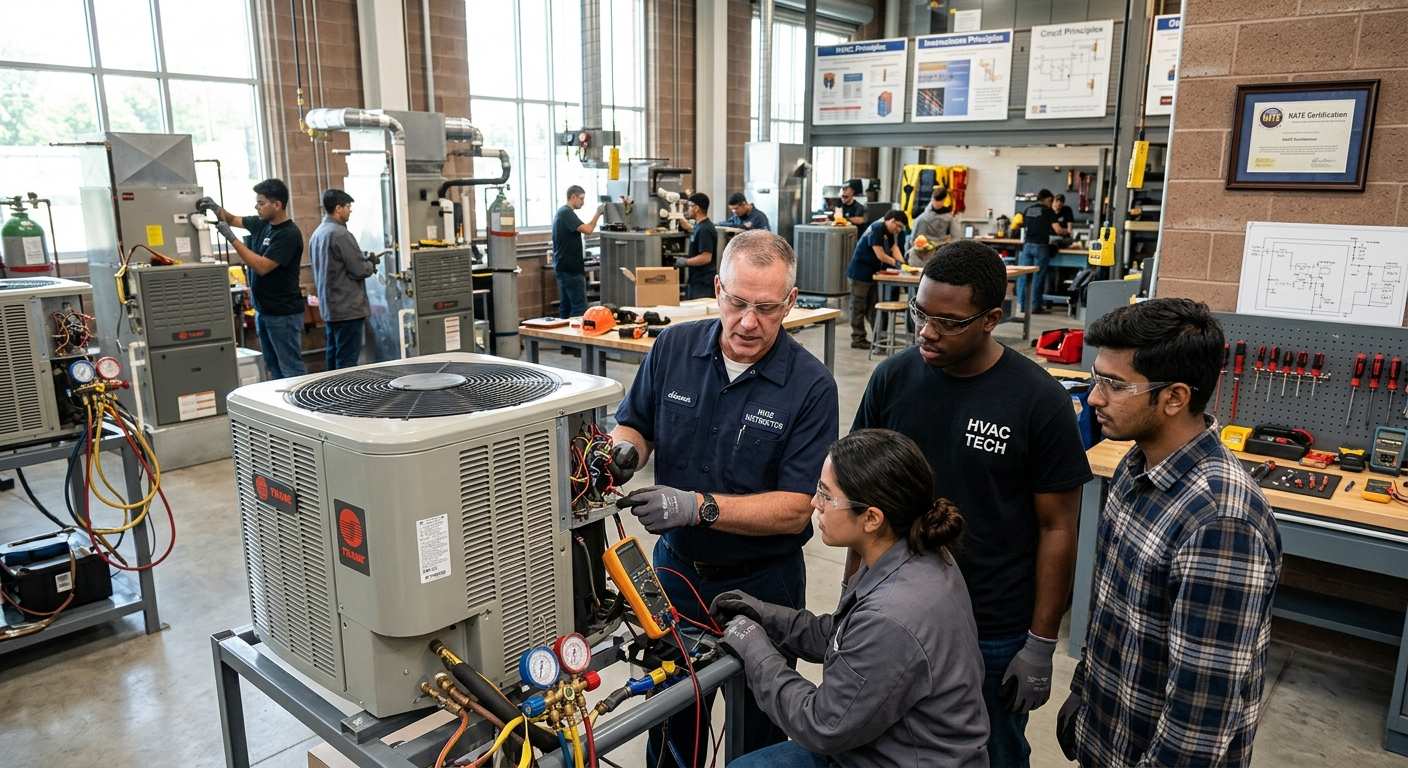
Building a career in HVAC involves formal education, hands-on training, and certifications. Essential certifications, like EPA Section 608 and the North American Technician Excellence (NATE), enhance job prospects and earning potential. Apprenticeships, typically lasting four years, combine classroom instruction with up to 8,000 hours of on-the-job training, allowing individuals to earn while they learn. Continued education incentives, including tuition assistance for advanced certifications, support progressive career development.
Challenges in Transitioning to HVAC Careers
Individuals transitioning from dead-end jobs to HVAC roles may face challenges such as obtaining necessary hands-on experience and navigating the demanding nature of the work. Access to quality training programs can vary, impacting the ability to accumulate essential skills. Additionally, financial pressures and irregular work schedules during training often complicate the transition. Geographic factors also influence job availability and compensation, with varying demand across different regions.
Support and Resources for Success
The HVAC industry offers numerous resources to facilitate career transitions and enhance skills. Support services, including career counseling and mentorship, help navigate the transition to technical roles. Financial aid options such as the Post-9/11 GI Bill and state-sponsored scholarships mitigate barriers for candidates. Apprenticeship programs, like those from Lane Community College, integrate practical and theoretical learning to adequately prepare individuals for effective entry into skilled HVAC careers.
The content is provided by Jordan Fields, ficustolife