Highlights
- The HVAC industry offers lucrative career opportunities for both new entrants and transitioning workers.
- Education and certification are essential for success in the rapidly evolving HVAC sector.
Overview of the HVAC Industry
The Heating, Ventilation, and Air Conditioning (HVAC) industry is essential for regulating indoor climates in various environments, including residential and commercial buildings. With HVAC systems becoming ubiquitous in new construction, the demand for skilled technicians is increasing significantly. This trend presents considerable career opportunities for both newcomers to the field and individuals transitioning from other professions. However, the HVAC sector faces a critical labor shortage, with approximately 110,000 technician positions unfilled due to an aging workforce and insufficient numbers of younger workers entering the field. Addressing this gap requires focused recruitment initiatives, industry partnerships, and effective workforce development programs.
Education and Certification Pathways
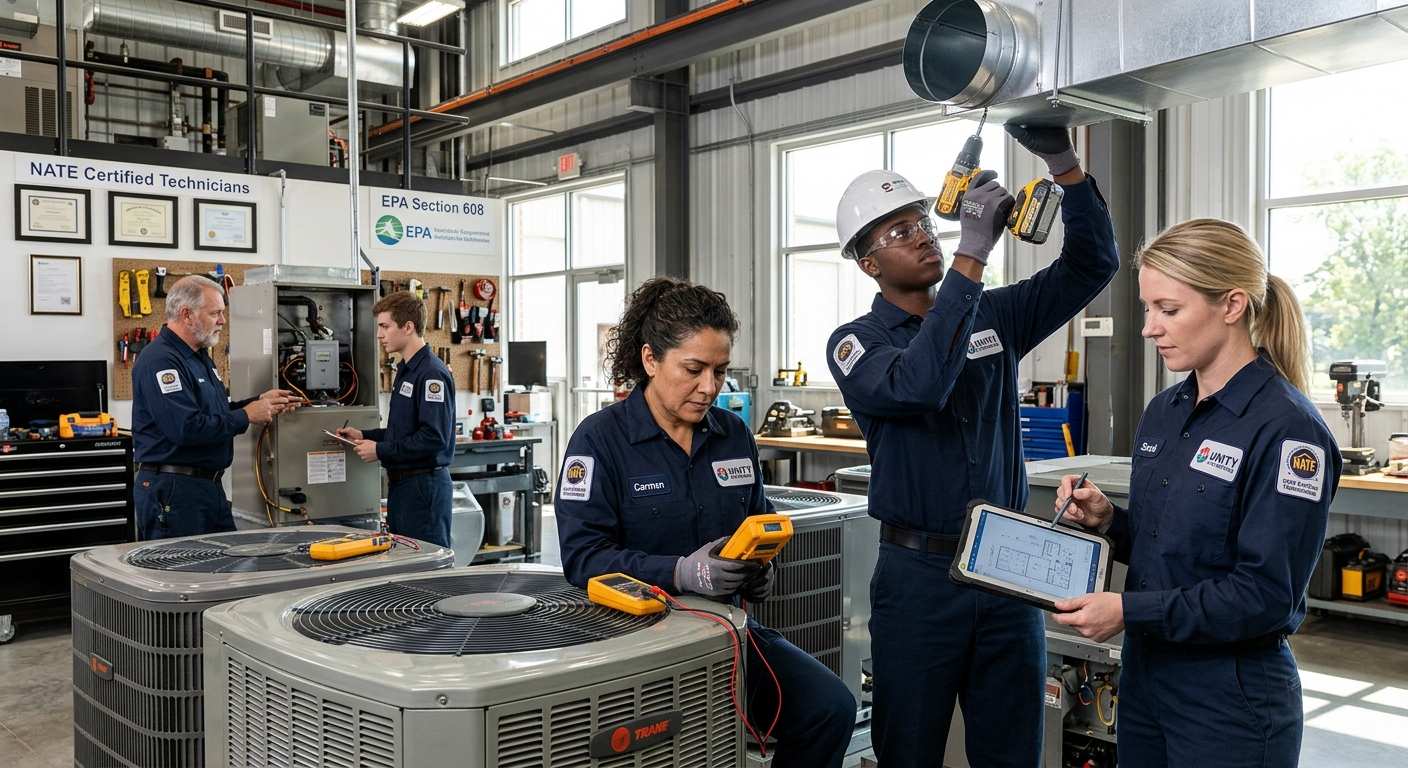
A solid educational foundation and relevant certifications are crucial for success in HVAC careers. Training options include vocational schools, community colleges, and online programs, which provide flexibility for working adults and career changers. Many programs prepare participants for essential certifications, such as the EPA 608 and North American Technician Excellence (NATE) credentials. Apprenticeships are also critical, blending hands-on experience with classroom instruction, allowing apprentices to earn while they learn. These pathways enhance employability and demonstrate commitment to the field, but prospective HVAC professionals must also navigate the complexities of licensing and ongoing education requirements, which can vary by state.
Challenges for Transitioning Workers
Former workers entering the HVAC industry face several challenges that may hinder their transition. The ongoing labor shortage creates a competitive environment for new entrants as they must quickly acquire necessary skills in a field that may seem technically demanding. Financial considerations, such as the cost of vocational training and associated tools, pose additional hurdles, as these expenses can vary significantly. Physical demands of the job may also be daunting for those from less strenuous backgrounds. Coupled with income fluctuations due to the cyclical nature of HVAC work, these factors necessitate a well-rounded approach to career planning for those transitioning into the field.
Support Systems and Resources for New Entrants
Support services and resources are available to assist former workers in their transition to HVAC careers. Various training programs offer comprehensive instruction in essential skills, often supplemented by mentorship opportunities tailored for veterans or individuals from different sectors. Financial aid options, such as scholarships and employer-sponsored programs, help mitigate training costs, making education more accessible. Additionally, many HVAC employers provide benefits such as healthcare and educational support to attract and retain skilled employees, reinforcing the industry’s commitment to workforce development and employee well-being.
Future Opportunities in HVAC
Looking forward, the HVAC industry is poised for growth, with employment projected to increase by 6% over the next decade, resulting in approximately 25,000 new jobs. Annual job openings are expected to be robust due to retirements, maintaining steady demand for skilled technicians. Prospective entrants can enhance their job readiness through comprehensive training programs and apprenticeships. Companies within the sector are actively employing modern recruitment strategies to attract new talent, ensuring that clear pathways into the trade are established. This strategic approach benefits both the industry and those entering it, highlighting HVAC careers as a viable choice for long-term professional success.
The content is provided by Harper Eastwood, ficustolife